Solid-State vs. Lithium-ion Batteries: Which Technology Will Power the Future?
A head-to-head comparison of today's dominant lithium-ion cells against the solid-state batteries poised to revolutionize electric vehicles, electronics, and the entire energy grid.
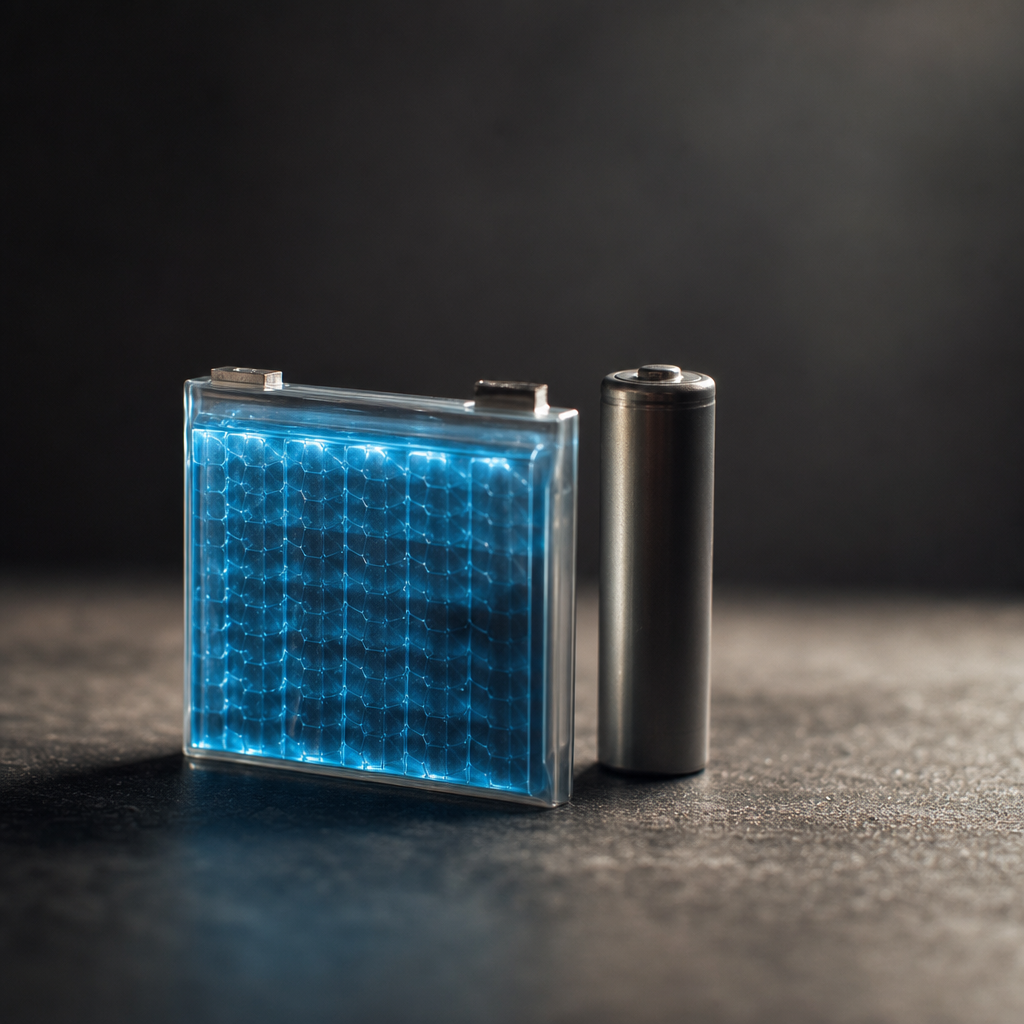
The battle for the future of energy storage is a head-to-head clash: solid-state vs. lithium-ion batteries. While lithium-ion technology currently powers everything from iPhones to Teslas, solid-state batteries represent a paradigm shift. They promise a trifecta of improvements—higher energy density, superior safety, and a longer lifespan. Although significant manufacturing and cost hurdles still stand in the way, solid-state technology is widely seen as the inevitable successor that will unlock the next generation of electric vehicles and portable electronics.
The Reigning Champion: A Primer on Lithium-ion
For the past three decades, the lithium-ion (Li-ion) battery has been the undisputed king of rechargeable energy. Its invention, a feat which earned M. Stanley Whittingham, John Goodenough, and Akira Yoshino the 2019 Nobel Prize in Chemistry, catalysed the portable electronics revolution. A lithium-ion battery is a type of rechargeable battery that relies on the movement of lithium ions to generate an electric current. Inside each cell, you have four key components: a positive electrode (cathode), a negative electrode (anode), a separator, and a liquid electrolyte.
When the battery is discharging power to your device, lithium ions travel from the anode, through the electrolyte and separator, to the cathode. When you recharge it, an external voltage forces those ions to travel back to the anode. The liquid electrolyte—typically a lithium salt dissolved in an organic solvent—is the crucial medium that facilitates this ionic flow. It’s highly conductive but also volatile and flammable, which is the technology’s primary weakness.
Despite this, its advantages are formidable. Li-ion technology offers a good balance of energy density (the amount of energy stored per unit of volume or mass), power output, and a relatively long cycle life, typically 1,000 to 2,000 cycles before significant degradation. Decades of research and massive economies of scale, driven by giants like China's CATL and South Korea's Samsung SDI, have also pushed the cost down dramatically. The price of an EV battery pack has fallen nearly 90% in the last decade, recently dropping below the critical threshold of $100 per kilowatt-hour (kWh), making electric vehicles competitive with their internal combustion engine counterparts.
The Challenger: What Are Solid-State Batteries?
A solid-state battery (SSB) is an electrochemical cell that uses a solid material for its electrolyte instead of a liquid. This single architectural change is the source of all its potential advantages. The solid electrolyte acts as its own separator and is far more stable, non-flammable, and resistant to the physical changes that degrade Li-ion batteries over time. These electrolytes can be made from various materials, including ceramics (like oxides and sulfides) or solid polymers.
This fundamental redesign allows for more advanced battery chemistries. Most notably, it enables the use of a pure metallic lithium anode. In conventional Li-ion batteries, using a lithium metal anode is extremely dangerous because it can form needle-like structures called dendrites during charging. These dendrites can pierce the separator and short-circuit the cell, causing a fire. A rigid solid electrolyte physically blocks dendrite growth, making it possible to safely harness the incredible energy density of lithium metal. This is the key that unlocks the next leap in performance.
Head-to-Head: A Feature-by-Feature Comparison
When placed side-by-side, the theoretical advantages of solid-state technology are stark. While lithium-ion is a highly optimised and mature product, it is approaching the physical limits of its chemistry. Solid-state represents a new frontier with a much higher performance ceiling. Let's break down the key battlegrounds.
| Feature | Lithium-ion Batteries (Current Generation) | Solid-State Batteries (Projected) |
|---|---|---|
| Energy Density | ~250-300 Wh/kg | 400-500+ Wh/kg |
| Safety | Moderate; requires complex thermal management systems due to flammable liquid electrolyte. | High; solid electrolyte is non-flammable, virtually eliminating fire risk. |
| Lifespan (Charge Cycles) | 1,000–2,000 cycles to 80% capacity | Potentially 5,000+ cycles; much slower degradation. |
| Charging Speed | 30-60 minutes for 10-80% charge. | Potential for under 15 minutes for 10-80% charge. |
| Operating Temperature | Narrow range; performance degrades in extreme cold or heat. | Wider operating temperature range due to stable materials. |
| Cost & Availability | Below $100/kWh; widely available at massive scale. | Currently very high; not yet in mass production. Cost parity is the main challenge. |
“Solid-state isn't just an incremental improvement. It's a foundational technology that changes the rules on safety and performance, much like the transistor replaced the vacuum tube.”
The Billion-Dollar Race to Mass Production
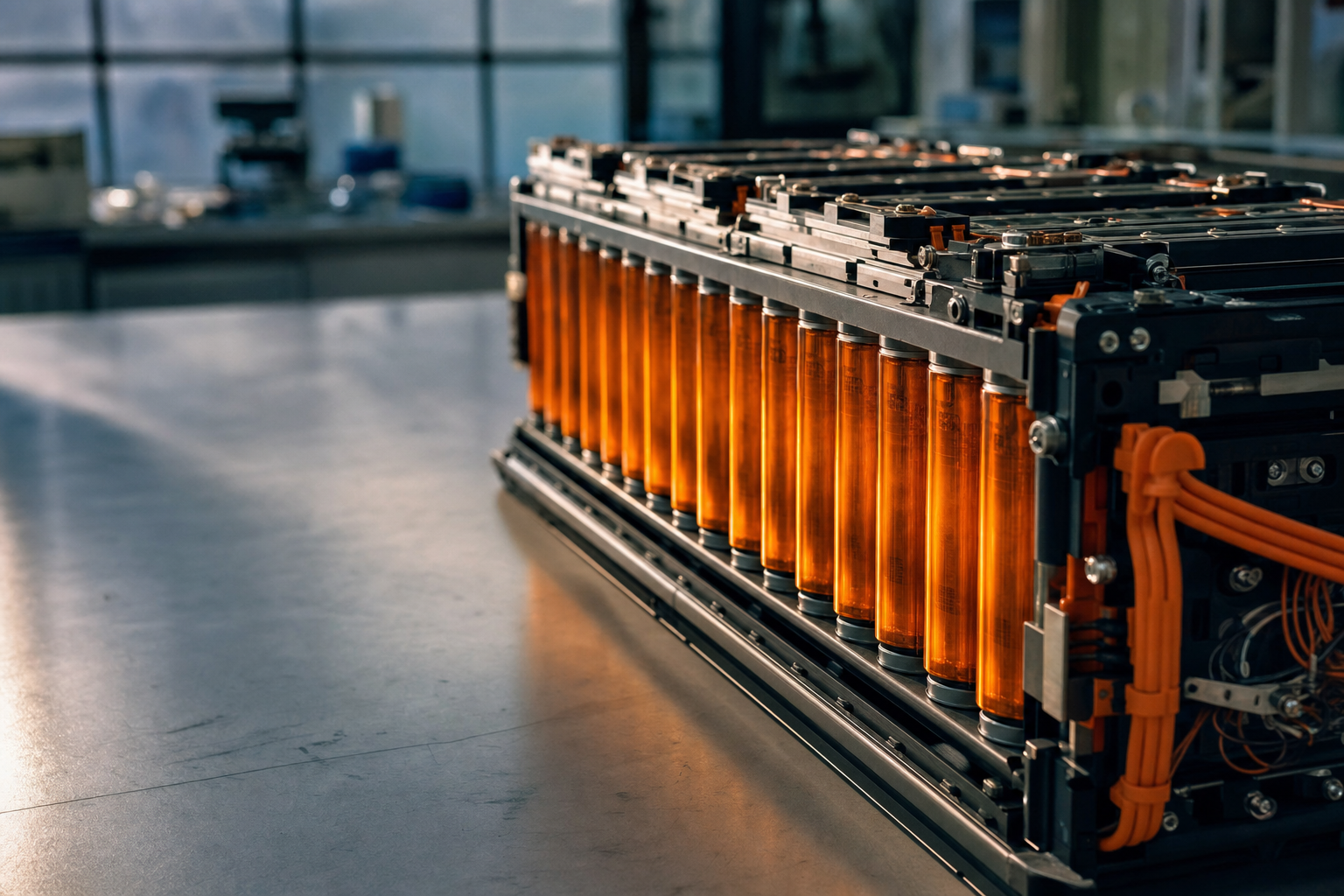
Despite the clear scientific promise, the path from a lab prototype to a gigafactory producing millions of cells is fraught with challenges. The primary obstacle is manufacturing at scale. Creating large, defect-free layers of solid electrolyte is incredibly difficult. These ceramic or polymer films are brittle and can crack under the pressure and volume changes that occur during charging and discharging, leading to a loss of contact between the layers and cell failure.
This challenge has attracted billions of dollars in investment from both venture capitalists and automotive giants. Companies like US-based QuantumScape (backed by Volkswagen) and Solid Power (backed by Ford and BMW) are pioneers in the field, developing novel materials and production processes. Meanwhile, automotive titan Toyota claims to hold over 1,000 patents related to solid-state batteries and has repeatedly stated its intention to commercialise them in its vehicles before 2030, a goal shared by competitors Honda and Nissan.
Government initiatives are also accelerating research. The UK's Faraday Institution, for instance, has a dedicated research project called SOLBAT aimed at breaking down the sceintific barriers to solid-state technology. The goal for all these players is to achieve cost parity with Li-ion while demonstrating reliability and performance in real-world conditions. Initial forecasts suggest the first wave of vehicles with solid-state batteries will be high-end luxury or performance models, with costs gradually falling to allow for mass-market adoption in the following decade.
Projected Energy Density: Li-ion vs. Solid-State
The Verdict: Evolution vs. Revolution
So, which battery will power our future? The answer lies in the timeline. For the remainder of this decade, lithium-ion will continue to reign supreme. It is a proven, reliable, and continuously improving technology. Manufacturers will squeeze more performance from it through improved cell chemistry and battery pack design. Over 95% of the world's EVs will be sold with a Li-ion battery inside for at least the next five years.
However, the long-term future almost certainly belongs to solid-state technology. The step-change improvements it offers in energy density, safety, and charging speed are too significant to ignore. These are not minor tweaks; they are revolutionary advances that will enable 1,000-kilometre range EVs, regional electric aircraft, and safer, longer-lasting consumer electronics. The transition will not be overnight, but as the manufacturing challenges are solved one by one, the revolutionary will become the routine. The question isn't *if* solid-state will replace lithium-ion, but *when*.
Frequently Asked Questions
When will solid-state batteries be in cars?
Automakers like Toyota and Nissan are targeting the 2027-2028 timeframe for the first commercial launch of solid-state batteries, likely in small quantities for high-end or niche electric vehicle models. Widespread, mass-market adoption is not expected until after 2030, once manufacturing costs come down.
Are solid-state batteries safer than lithium-ion?
Yes, solid-state batteries are inherently safer. They replace the flammable and volatile liquid electrolyte found in lithium-ion batteries with a stable, non-flammable solid material. This design virtually eliminates the risk of thermal runaway and fires caused by short circuits or punctures.
What is the main disadvantage of solid-state batteries?
The primary disadvantage currently is cost and manufacturing complexity. Producing large, thin, and durable solid electrolyte layers without defects is extremely challenging and expensive. Until these manufacturing processes can be scaled up efficiently, solid-state batteries will remain much more expensive than conventional lithium-ion batteries.
Can solid-state batteries be recycled?
Yes, in principle, solid-state batteries can be recycled, but the processes will be different from those for current lithium-ion batteries. Because the components are bonded together in a solid form, disassembly can be more complex. Research is underway to develop efficient and cost-effective recycling methods to recover valuable materials like lithium.
Which companies are leading in solid-state battery development?
Key players in solid-state battery development include automotive giants like Toyota, Honda, and Nissan; battery manufacturers like Samsung SDI; and specialized startups such as QuantumScape (backed by VW) and Solid Power (backed by Ford and BMW). These companies are all racing to solve the remaining technical hurdles.
How did this land?
Related Reading

More by this writer — Elias Vance
→
Featured Research

9 Underrated European Cities to Visit Instead of the Crowds
9 min read

What Is Universal Basic Income and How Would It Work?
7 min read
Rewilding vs. Traditional Conservation: Which Is the Future of Biodiversity?
8 min read
Beyond Lithium: How Common Salt Is Quietly Powering the Next Battery Revolution
7 min read