Rewilding vs. Traditional Conservation: Which Is the Future of Biodiversity?
A head-to-head analysis of two leading philosophies for saving nature, comparing the hands-off ecosystem restoration of rewilding with the hands-on species management of traditional conservation.
Rewilding focuses on restoring natural ecosystem processes by reducing human management and reintroducing keystone species to let nature largely manage itself. In contrast, traditional conservation typically involves active, targeted intervention to manage specific habitats or protect individual species, often with the goal of maintaining or returning to a known historical baseline. The choice between them is a defining question for 21st-century environmentalism, hinging on project goals, landscape scale, and a fundamental philosophical divide over humanity's role in the natural world.
Core Philosophy: Intervention vs. Autonomy
At its heart, the debate between these two approaches is a philosophical one. Traditional conservation, as practiced for over a century by organisations like the IUCN and The Nature Conservancy, operates on a principle of stewardship. It views nature as a fragile system that requires human protection and management to survive the pressures of the modern world. This approach is often goal-oriented, focusing on achieving specific, measurable outcomes—such as increasing the population of the California Condor or preserving a particular type of chalk grassland habitat in the UK. The desired state is often a ‘pristine’ condition, usually based on an ecological baseline from the recent past, before major industrial or agricultural disruption.
Rewilding, a newer and more radical concept popularised by figures like author George Monbiot and conservationist Isabella Tree, challenges this paradigm. It argues that our attempts to micro-manage nature are often part of the problem. A keystone species is a species that has a disproportionately large effect on its natural environment relative to its abundance. Rewilding's core idea is to restore ecological integrity by reintroducing these keystone species and a a process known as a trophic cascade, where the impacts of a predator at the top of the food chain ripple down to affect the entire ecosystem. The philosophy is one of humility and patience; it accepts that the outcome is uncertain and that the resulting ecosystem may not resemble anything from human memory. The goal isn’t to create a perfect replica of the past, but to restart the engine of evolution and let it run.
Methods and Interventions
The methods employed by each camp are starkly different. A traditional conservation project might involve building fences to protect a sensitive area from grazing, planting native trees according to a detailed plan, managing water levels in a wetland, and actively culling 'invasive' species or overabundant herbivores like deer. Success is measured by metrics like species counts and habitat coverage. These are often labour-intensive, requiring ongoing funding and human presence. Think of a nature reserve manager meticulously monitoring orchid populations or coppicing woodland to maintain a specific light level for butterflies.
Rewilding interventions are typically front-loaded and aim to become redundant over time. The most famous method is the reintroduction of extirpated species, particularly large herbivores (bison, wild horses) and apex predators (wolves, lynx). The idea is that these animals act as 'ecosystem engineers'. Grazers create a mosaic of habitats, while predators control herbivore numbers, preventing overgrazing and allowing vegetation to recover. Other methods include removing dams to reconnect rivers, stopping drainage on peatlands, and simply ceasing management altogether. After the initial intervention, the human role shifts from manager to observer. According to Rewilding Europe, over 1,700 square kilometres of land are currently under rewilding initiatives in their operational areas alone.
| Feature | Traditional Conservation | Rewilding |
|---|---|---|
| Core Goal | Preserve specific species or habitats; maintain a stable 'baseline' state. | Restore natural processes and ecological complexity; create a self-willed, dynamic system. |
| Human Role | Active, ongoing manager (stewardship). Fencing, planting, culling, monitoring. | Initial catalyst, then passive observer. Removing barriers, reintroducing species. |
| Key Indicators | Population counts of target species, habitat area, species diversity. | Ecological functionality, trophic complexity, resilience, natural disturbance. |
| Timescale | Perpetual management required to maintain desired state. | Intensive short-term intervention followed by long-term, low-intensity monitoring. |
| Common Critiques | Expensive, labour-intensive, creates 'ecological museums', can be overly rigid. | Land-intensive, potential for human-wildlife conflict, unpredictable outcomes, 'playing God' with reintroductions. |
| Flagship Example | California Condor Recovery Program (USA) | Knepp Estate (UK), Oostvaardersplassen (Netherlands) |
Key Examples: Yellowstone vs. Local Nature Reserves
Perhaps the most celebrated case study for rewilding is the reintroduction of gray wolves to Yellowstone National Park in the US starting in 1995. Before the wolves returned, high elk populations had overgrazed willow and aspen trees along riversides. This led to a decline in beaver populations, which need willows to build dams, and songbirds, which nest in the trees. The reintroduction of just a few dozen wolves triggered a remarkable trophic cascade. Elk behaviour changed; they avoided valleys and gorges where they could be easily hunted. This allowed vegetation to rebound, which in turn stabilised riverbanks, brought back beavers and songbirds, and even changed the physical geography of the rivers themselves. It’s a powerful demonstration of how restoring one key process can heal an entire landscape with minimal ongoing human input.
In the UK, the Knepp Estate in West Sussex provides a European-scale example. Since 2001, this 3,500-acre former intensive farm has been devoted to a 'process-led' conservation project. Instead of trying to create a specific habitat, the owners introduced free-roaming cattle, ponies, pigs, and deer to simulate the pressures of ancient herbivores. The results have been astonishing. The land has transformed into a complex mosaic of grassland, scrub, and young woodland. It is now a breeding hotspot for critically endangered species like turtle doves and nightingales, with insect biomass exploding. Knepp demonstrates that rewilding can work even in a crowded, managed landscape like southern England.
“The great thing about rewilding is that you are not in charge. Nature, once you have given it the space and the key drivers back, will be more imaginative than you can ever be.”
Contrast this with a typical local nature reserve in Canada or Australia, managed under a traditional conservation model. Here, a team of ecologists and volunteers might spend significant resources controlling invasive species like Himalayan balsam or Japanese knotweed, managing paths for public access, and ensuring ponds don't silt up. While vital for protecting localised, rare species and providing community green space, this approach creates an island of managed biodiversity that requires constant defensive action. Its impact is contained, and its costs are perpetual. The WWF estimates that global spending on conservation is at least USD $100 billion per year, much of it on such active management.
Costs and Scalability
Financially, the two models present different profiles. Traditional conservation often involves high and continuous operational costs for staff, equipment, and monitoring. The cost to manage a hectare of land can be significant and recurring, making it difficult to scale without substantial endowments or government subsidies.
Rewilding projects often have high initial costs, especially if land purchase and species reintroduction (which can run into millions of euros for large animals) are involved. However, the long-term goal is to drastically reduce management costs. At Knepp, for instance, the project is now profitable through a combination of high-welfare organic meat sales, ecotourism, and UK environmental subsidies that reward biodiversity outcomes. This model, which stacks different revenue streams, suggests rewilding could be economically self-sustaining on a large scale, a holy grail for conservation finance. Proponents argue that for every dollar invested in rewilding, the return in 'ecosystem services'—like flood mitigation, carbon sequestration, and water purification—is many times higher.
Projected Growth in Land Under Rewilding Management
Outcomes, Criticisms, and a Hybrid Future
Both approaches have faced fair criticism. Traditional conservation is sometimes accused of creating 'natural museums'—beautiful but static and fragile landscapes that depend entirely on human life support. It can also be species-centric, focusing on charismatic animals like pandas or tigers while neglecting the less glamorous but equally vital soil fungi, insects, and ecological processes that underpin the entire system.
Rewilding is not without its controversies. Proposals to reintroduce predators like wolves or bears often meet with fierce opposition from farming communities concerned about livestock losses. The famous Dutch rewilding project Oostvaardersplassen faced a public outcry and political intervention when large numbers of herbivores starved during a harsh winter, raising complex questions about animal welfare in these semi-wild systems. Furthermore, rewilding requires vast tracts of land, a scarce commodity in many parts of the world. Critics ask whether it is a luxury affordable only to wealthy nations with depopulated rural areas.
Ultimately, the future of protecting biodiversity will not be a simple case of rewilding vs. traditional conservation. The most likely, and most effective, path forward is a mosaic approach. Densely populated agricultural landscapes might continue to rely on targeted, traditional methods to protect remnant habitats and species. In parallel, marginal agricultural land, post-industrial sites, and large public holdings could be given over to process-led rewilding. As the climate changes and ecosystems are thrown into flux, the resilience and adaptability fostered by rewilding will become ever more valuable. The gardener and the wild-crafter both have a role to play; the challenge is knowing when to intervene and when to step aside.
Frequently Asked Questions
What is the main difference between rewilding and conservation?
The main difference lies in the level of human control. Traditional conservation actively manages habitats and species to preserve a specific state. Rewilding aims to restore natural processes and reintroduce key species, then steps back to allow the ecosystem to develop on its own with minimal intervention.
Can rewilding be applied in urban areas?
Yes, although on a smaller scale. Urban rewilding focuses on creating 'wilder' green spaces, such as leaving parks unmown, creating corridors for wildlife, daylighting buried streams, and using native plants that support pollinators. The goal is to bring natural processes back into cities to improve biodiversity and human well-being.
Is rewilding always about reintroducing large predators?
No. While reintroducing apex predators like wolves is a well-known aspect of rewilding, it's not a universal requirement. Rewilding can also focus on reintroducing large herbivores like bison, restoring rivers by removing dams, or simply stopping management to let natural vegetation succession occur. The focus is always on restoring natural processes, not just specific species.
What are the main criticisms of traditional conservation?
Critics argue that traditional conservation can be very expensive and labour-intensive, creating 'ecological museums' that require constant management to prevent change. It can be overly focused on a few charismatic species, and can be too rigid, trying to preserve a fixed historical state that may no longer be suitable in a changing climate.
How does rewilding help with climate change?
Rewilding helps fight climate change primarily through carbon sequestration. Restored ecosystems, particularly forests, wetlands, and healthy grasslands, draw down and store significant amounts of carbon from the atmosphere. Additionally, healthy, complex ecosystems are more resilient to climate impacts like droughts, floods, and wildfires.
How did this land?
Related Reading
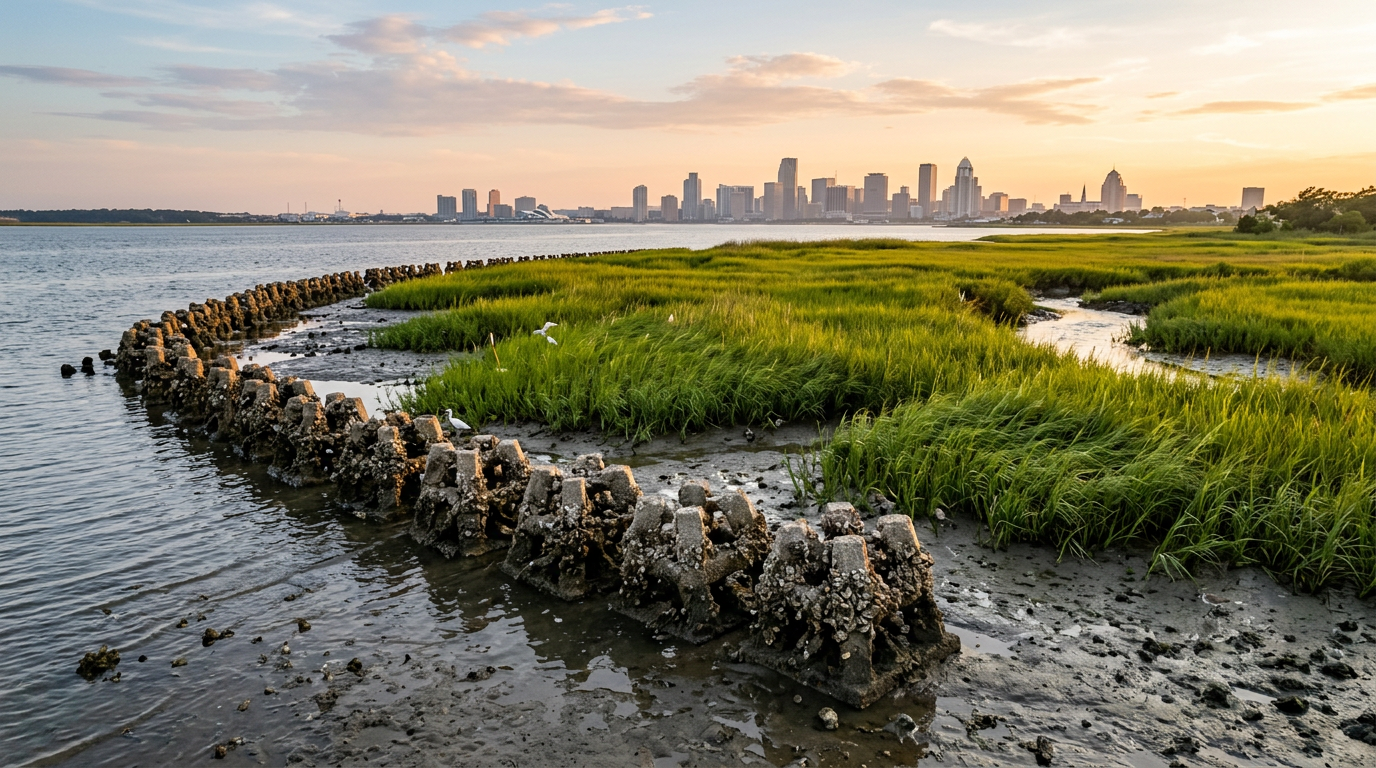
The Living Breakwaters Remaking Our Carbon-Soaked Coastlines
As sea levels rise, cities are abandoning hard concrete for soft, living infrastructure that invites nature back to defend the urban shoreline from a changing climate.
6 min read
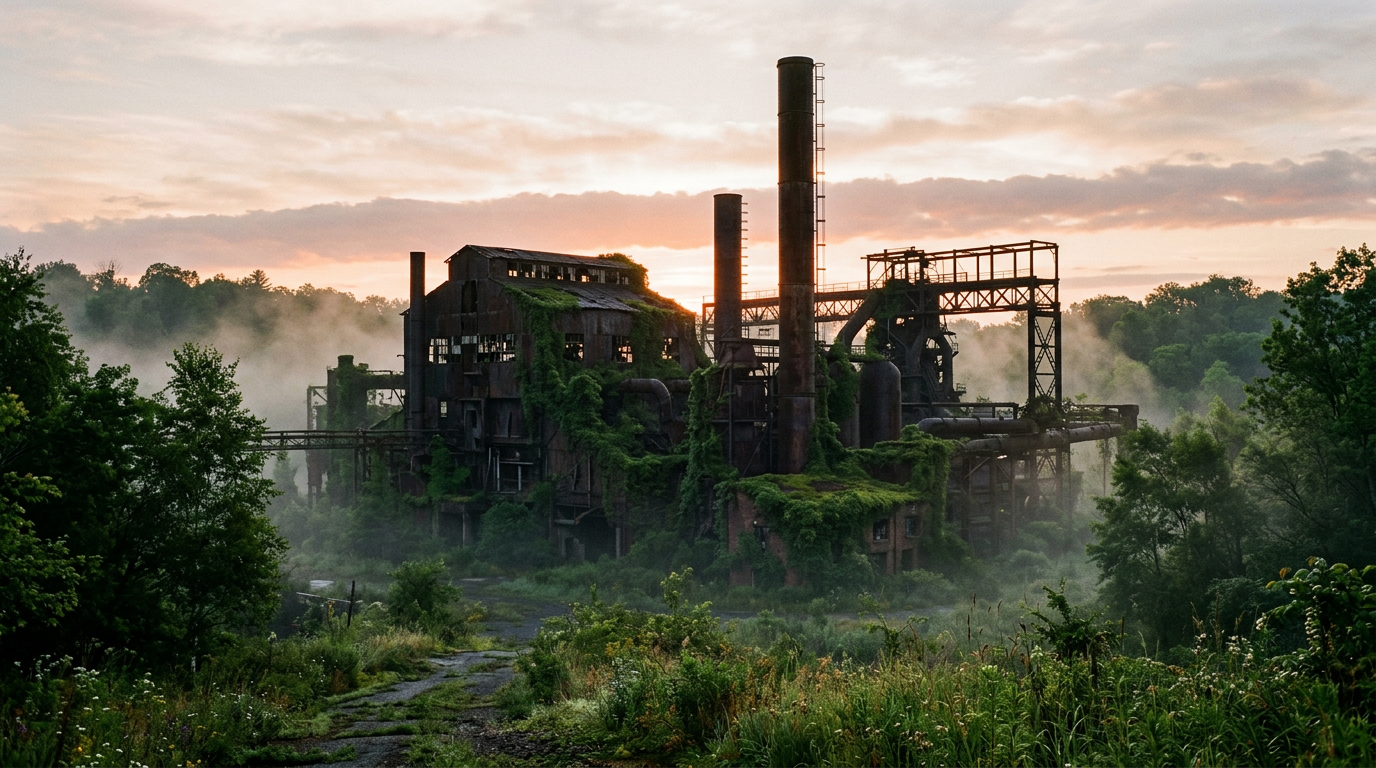
The Sonic Ghosts of Ruin: Listening for Life in Post-Industrial Landscapes
Abandoned mines and factories are not silent; they are teeming with acoustic data that reveals a complex, often surprising story of ecological recovery invisible to the naked eye.
7 min read
More by this writer — Dr. Aris Thorne
→Featured Research

Beyond Lithium: How Common Salt Is Quietly Powering the Next Battery Revolution
7 min read

The End of the Farm as We Know It: The Quiet Revolution of Precision Fermentation
7 min read

The Silent Terminals: What Ghost Airports Reveal About Our Broken Dreams of Flight
7 min read

The Digital Harvest: Who Owns the Data From a Smart Farm?
7 min read