9 Underrated European Cities to Visit Instead of the Crowds
Tired of the tourist hordes in Paris and Rome? These nine stunning, culture-rich underrated European cities offer authentic experiences without the overwhelming crowds or inflated prices.
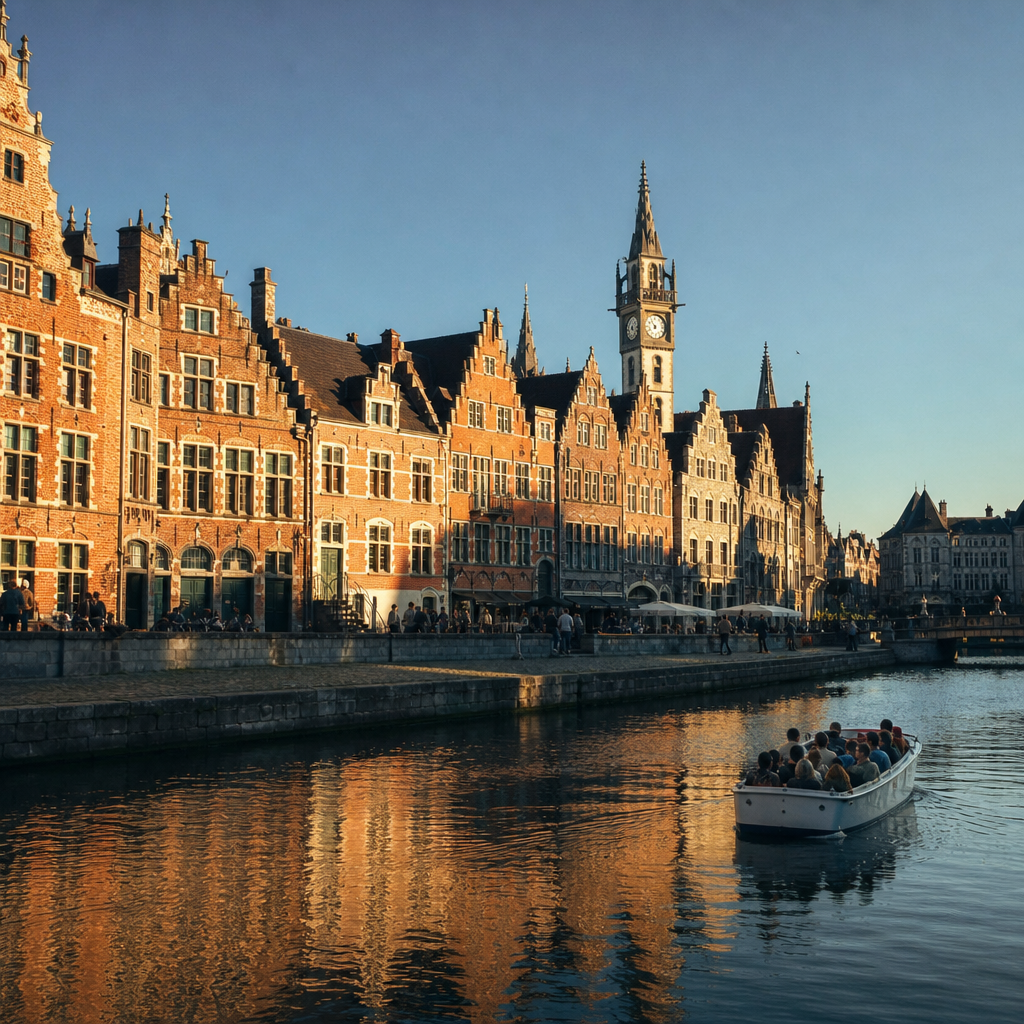
For travelers seeking authentic culture without the crush of mass tourism, there are countless underrated European cities waiting to be discovered. These destinations, from Bologna's culinary heart to Ljubljana's fairytale bridges, offer the history, beauty, and vibrancy of their more famous counterparts like Rome and Paris, but with fewer crowds, lower prices, and a more intimate, local feel. They provide a compelling alternative for a more sustainable and rewarding journey.
1. Ghent, Belgium
Often living in the shadow of Brussels and Bruges, Ghent is arguably Belgium's best-kept secret. This vibrant university city boasts a stunning medieval core that rivals any in Europe, but with a lived-in, unpretentious atmosphere. Canals thread through a cityscape of gabled houses and imposing structures like the Gravensteen (Castle of the Counts), a 12th-century fortress plopped right in the city centre. Unlike the sometimes museum-like feel of Bruges, Ghent buzzes with contemporary life, from its thriving arts scene to its forward-thinking culinary landscape.
Ghent has declared itself the 'Veggie Capital of Europe,' with a remarkable density of vegetarian and vegan restaurants. Every Thursday is 'Veggie Day' (Donderdag Veggiedag), a city-wide initiative encouraging meat-free eating. Beyond food, the city's commitment to sustainability is evident in its highly walkable and bikeable layout. A boat tour along the Lys and Leie rivers offers a tranquil perspective on the Graslei and Korenlei, the city's iconic waterfronts. With a population of around 265,000, it’s large enough to be dynamic but small enough to feel welcoming.
2. Ljubljana, Slovenia
Slovenia's capital is a fairytale city come to life. Ljubljana (pronounced 'lyoo-blyah-nah') is a compact, green metropolis bisected by the gentle Ljubljanica River, its banks lined with cafes and crossed by enchanting bridges like the Triple Bridge and the Dragon Bridge. The city, which won the European Green Capital award in 2016, has a pedestrianised city centre that invites leisurely exploration. Overlooking it all is Ljubljana Castle, a medieval fortress accessible by a funicular railway, offering panoramic views of the city and the distant Julian Alps.
The city's soul is perhaps best captured in the architectural works of Jože Plečnik, who shaped modern Ljubljana much like Gaudí shaped Barcelona. His influence is everywhere, from the river embankments to the Central Market, a bustling hub for local produce and Slovenian delicacies. With a vibrant student population infusing energy into its Baroque and Art Nouveau streets, Ljubljana feels both historic and youthful, offering a perfect base for exploring Slovenia’s stunning natural landscapes, including Lake Bled, which is just a short bus ride away.
3. Bologna, Italy
While tourists flock to Florence for art and Rome for history, food lovers in the know head to Bologna. Nicknamed 'La Grassa' (The Fat One), the capital of the Emilia-Romagna region is Italy's undisputed gastronomic capital. This is the birthplace of tagliatelle al ragù (the authentic inspiration for spaghetti bolognese), mortadella, and tortellini. The Quadrilatero, a maze of medieval alleyways off the main square, Piazza Maggiore, teems with food stalls, delis, and trattorias offering a sensory overload of the highest quality.
Bologna is also known as 'La Dotta' (The Learned) for hosting the University of Bologna, the oldest university in the Western world, founded in 1088. This heritage lends the city a lively, intellectual atmosphere. Its third nickname, 'La Rossa' (The Red), refers to the terracotta-hued rooftops that define its skyline. Explore the city beneath its famous porticoes, an almost 40-kilometre network of covered walkways that make strolling the city a delight in any weather. Climb the Asinelli Tower for a breathtaking view of the red city below.
“The real magic of travel isn't found in ticking off a checklist of famous sights, but in the quiet discovery of a place that feels like it's yours alone.”
4. Wrocław, Poland
Often compared to Krakow but with a fraction of the stag parties, Wrocław (pronounced 'vrots-wahf') is a phoenix of a city. Almost completely destroyed in World War II, its magnificent Old Town was painstakingly rebuilt to its former glory. The heart of the city is the Rynek, or Market Square, one of Europe’s largest and most beautiful, lined with vibrantly coloured townhouses. The city is built across 12 islands on the Oder River, connected by more than 100 bridges, earning it the nickname 'The Venice of Poland'.
One of Wrocław's most whimsical charms is hunting for the 'krasnale', or bronze dwarfs. What started as an anti-communist political statement in the 1980s has evolved into over 400 tiny statues scattered throughout the city, each with its own character and story. Beyond the dwarfs, explore Cathedral Island (Ostrów Tumski), the oldest part of the city, where gas lamps are still lit by hand each evening. The city was a European Capital of Culture in 2016, and its cultural scene continues to thrive with numerous theatres, festivals, and a buzzing nightlife.
| City | Counterpart | Average Daily Cost (EUR) | 2023 Visitor Overnights (millions) | Primary Appeal |
|---|---|---|---|---|
| Ghent, Belgium | Brussels | €125 | 2.5 | Medieval charm, youthful vibe |
| Bologna, Italy | Rome | €140 | 7.1 | World-class gastronomy |
| Lyon, France | Paris | €150 | 6.0 | Foodie capital, Roman history |
| Utrecht, Netherlands | Amsterdam | €160 | 2.1 | Charming canals, less intense |
| Wrocław, Poland | Krakow | €90 | 5.2 | Fairytale architecture, islands |
5. Lyon, France
While Paris gets the global spotlight, many French citizens will tell you their country's true culinary capital is Lyon. Situated at the confluence of the Rhône and Saône rivers, Lyon's history spans 2,000 years, from its days as the Roman capital of Gaul (Lugdunum) to its role as a major centre for silk production. This rich history is inscribed on its cityscape, with a sprawling Renaissance Old Town (Vieux Lyon), a Roman amphitheatre, and the modern Confluence district with its deconstructivist museum.
Food is the cornerstone of Lyonnaise culture. The city is famous for its 'bouchons', traditional bistros serving hearty, meat-centric dishes like coq au vin and quenelles de brochet. For a more modern taste, the renovated Les Halles Paul Bocuse food market is a paradise for gourmands. Explore the 'traboules', hidden passageways that run through buildings in Vieux Lyon, once used by silk weavers to transport their goods. A funicular will whisk you up Fourvière Hill to the magnificent Basilique Notre-Dame de Fourvière for commanding views of the entire city.
6. Gothenburg, Sweden
Sweden's second-largest city offers a more laid-back, approachable alternative to Stockholm. Gothenburg (Göteborg) is a historic port city with a friendly, maritime vibe. Dutch-style canals cross its centre, and a charming fleet of vintage trams makes getting around a pleasure. The city has a strong focus on sustainability, with a goal to be climate-neutral by 2030, and boasts an abundance of green spaces like the vast Slottsskogen park, which even has a free zoo.
Explore the Haga district, one of the city's oldest neighbourhoods, known for its picturesque wooden houses, independent shops, and giant cinnamon buns ('hagbullar'). The city's seafood is exceptional; the Feskekörka ('Fish Church') market hall is a must-visit for its fresh catch. For art lovers, the Gothenburg Museum of Art holds a world-class collection of Nordic art. In summer, the city's archipelago comes alive, with locals and visitors hopping on ferries to explore granite islands and quaint fishing villages just a short trip from the urban core.
Tourist Overload: Visitor-to-Resident Ratio in Select Cities
7. Utrecht, Netherlands
Imagine Amsterdam's charming canals, but without the constant throng of tourists and with a unique two-tiered structure. Welcome to Utrecht. The city's Oudegracht (Old Canal) has wharfs and cellars at water level, which have been converted into lively restaurants, bars, and boutiques. This creates a vibrant waterside atmosphere that is unique in the world. As a major university city, Utrecht has a young, dynamic energy that feels more authentically Dutch than the tourist-centric core of the capital.
Climb the Dom Tower, the tallest church tower in the Netherlands, for an unparalleled view of the city and its surroundings. Like many Dutch cities, Utrecht is a cyclist's paradise, boasting the world's largest bicycle parking garage. Renting a bike or a canal boat is the best way to explore. The city is also home to the Rietveld Schröder House, a UNESCO World Heritage site and an icon of the De Stijl architectural movement. Just a 30-minute train ride from Amsterdam, it makes for a perfect day trip or a much more relaxed base for exploring the country.
8. Leipzig, Germany
Dubbed 'The New Berlin' or 'Hypezig' for its booming arts scene and affordable cost of living, Leipzig is one of Germany's most dynamic cities. Located in the eastern state of Saxony, it has a rich history as a trade-fair city and a centre of music, with deep connections to composers like Bach, Wagner, and Mendelssohn. The St. Thomas Church, where Bach worked as a cantor for 27 years, still hosts performances by its world-renowned boys' choir.
After German reunification, abandoned factories and industrial buildings provided fertile ground for a new generation of artists. The Spinnerei, a former cotton mill, is now a massive complex of galleries, studios, and exhibition spaces, drawing creatives from around the world. The city's rebellious spirit also played a key role in the Peaceful Revolution of 1989 that led to the fall of the Berlin Wall. Leipzig combines this gritty, creative energy with beautifully restored Gründerzeit architecture and a network of canals and rivers perfect for kayaking.
9. Porto, Portugal
While Porto's popularity has soared in recent years, it still retains a grittier, more soulful character than the capital, Lisbon, and qualifies as a major city many travelers still overlook. Its historic Ribeira district, a UNESCO World Heritage site, is a charismatic jumble of colourful, crumbling facades tumbling down to the Douro River. Across the river in Vila Nova de Gaia, historic port wine cellars offer tours and tastings with stunning views back at the city.
Beyond the port, Porto is a city of stunning details. The São Bento train station's main hall is decorated with over 20,000 azulejo tiles depicting scenes from Portuguese history. The Livraria Lello, with its dramatic crimson staircase, is often cited as one of the world's most beautiful bookstores and is said to have inspired J.K. Rowling. And don't leave without trying the city's signature sandwich, the Francesinha—a gut-busting concoction of cured ham, sausage, and steak, covered in melted cheese and a hot tomato-beer sauce. It's an experience in itself.
Frequently Asked Questions
What makes a European city 'underrated'?
An underrated European city is typically one that offers significant historical, cultural, and aesthetic value but receives far fewer tourists than major capitals like Paris, Rome, or London. This often results in lower prices, fewer crowds, and a more authentic, local experience for visitors.
Are these lesser-known cities more affordable?
Generally, yes. Underrated cities, particularly those in Central and Eastern Europe like Wrocław or Ljubljana, often have significantly lower costs for accommodation, dining, and attractions. Even in Western Europe, cities like Ghent or Lyon can offer better value for money than their country's primary tourist magnets.
How do I travel between these cities?
Europe's extensive and efficient train network is the best way to travel between many of these cities. For example, you can easily travel from Ghent to Utrecht or from Leipzig to Wrocław by rail. For longer distances or less connected regions, budget airlines like Ryanair and EasyJet offer affordable flights.
Is English widely spoken in these underrated cities?
In most of the cities listed, especially in tourist areas, hotels, and among the younger population, English is widely spoken and understood. This is particularly true in places with large universities like Ghent, Utrecht, and Leipzig. However, learning a few basic phrases in the local language is always appreciated.
What is the best time of year to visit these destinations?
The shoulder seasons of spring (April-June) and autumn (September-October) are ideal for visiting most of these cities. You'll enjoy pleasant weather, fewer tourists than the peak summer months, and often lower prices for flights and accommodation. The atmosphere is generally more relaxed and local-focused during these times.
How did this land?
Related Reading
Featured Research
What Is Universal Basic Income and How Would It Work?
7 min read
Rewilding vs. Traditional Conservation: Which Is the Future of Biodiversity?
8 min read

Beyond Lithium: How Common Salt Is Quietly Powering the Next Battery Revolution
7 min read

The End of the Farm as We Know It: The Quiet Revolution of Precision Fermentation
7 min read