Your Body, Miniaturized: Inside the Organoid Revolution in Medicine
Scientists are now growing miniature, functional versions of human organs in the lab, creating biological avatars that could finally unlock truly personalized medicine for intractable diseases.
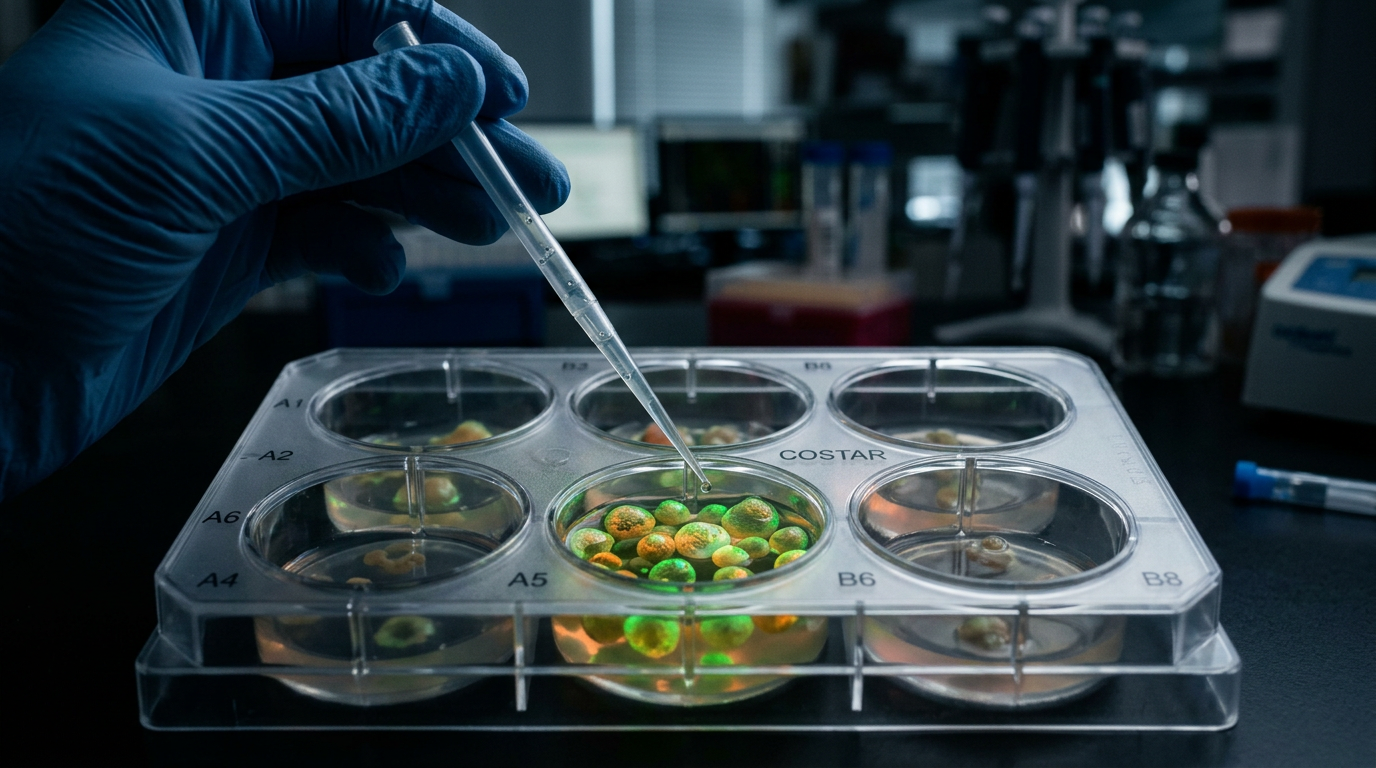
In a sterile, temperature-controlled incubator at the Hubrecht Institute in the Netherlands, thousands of lives are playing out in miniature. Not human lives, but something unsettlingly close: tiny, three-dimensional clusters of cells, no bigger than a pinhead, that have self-organized into facsimiles of human intestines. These are gut organoids. They contract, they absorb nutrients, they secrete mucus. Grown from the stem cells of individual patients, each one is a living biological avatar, a microscopic stand-in for the person who donated the initial cells. And they are at the vanguard of a medical revolution that promises to make treatment less of a guessing game and more of a bespoke science.
For decades, the path from identifying a disease to finding a cure has relied on a small, imperfect toolkit of models. Researchers have used flat, two-dimensional layers of cells in petri dishes or experimented on laboratory animals like mice. While indispensable, these methods have profound limitations. A single layer of cells cannot replicate the complex architecture and cellular interactions of a human organ, and a mouse, for all its utility, is not a 70-kilogram human. The result is a 'valley of death' in drug development, where countless promising compounds that work in the lab fail spectacularly in human clinical trials. Organoid technology offers a bridge across that chasm.
From Stem Cell to System
The creation of an organoid begins with a remarkable type of cell: a pluripotent stem cell. These are cellular blank slates, capable of developing into any of the more than 200 cell types that make up the human body. They can be sourced from embryos (a practice fraught with ethical debate) or, more commonly now, created from a patient's own adult cells—a skin or blood cell, for instance—which are biochemically 'reprogrammed' back to an embryonic-like state. These are known as induced pluripotent stem cells, or iPSCs, a discovery that won its pioneers the 2012 Nobel Prize in Medicine.
Once armed with these iPSCs, scientists provide them with a carefully orchestrated cocktail of growth factors and signaling molecules, nudging them down the specific developmental pathway of the desired organ. The cells are suspended in a gel-like matrix that provides scaffolding, allowing them to grow in three dimensions. What happens next is the true magic of biology. The cells begin to communicate, to differentiate, and to self-assemble, recapitulating the early stages of organ development in the womb. Within weeks, a tiny, simplified, but recognizably organ-like structure emerges. A cerebral organoid will develop rudimentary layers akin to a cortex; a kidney organoid will form primitive filtering units called nephrons.
Growth in Organoid-Related Research Publications (PubMed)
A Patient's Biological Twin
The most profound application of this technology lies in personalized medicine. Because an organoid is grown from a specific patient's cells, it carries that individual's unique genetic code. This means it also carries the genetic mutations responsible for their inherited diseases. For the first time, researchers can study a disease not in a generic model, but as it manifests in a specific person's biology, all within the confines of a lab.
Cystic fibrosis (CF) provides a powerful case study. CF is caused by mutations in the CFTR gene, but more than 2,000 different mutations exist, and each can respond differently to treatment. A drug that works wonders for one patient may do nothing for another. Traditionally, finding the right drug involved a painful process of trial and error on the patient. Today, researchers can create gut organoids from a CF patient's rectal biopsy. When these 'mini-guts' are exposed to a functional CFTR drug, they swell up with fluid—a direct, measurable proxy for whether the drug is correcting the cellular defect. This allows doctors to test a panel of drugs on the patient's organoids and select the one that produces the best response *before* administering a single dose to the patient. This approach is already being used in clinics in Europe and is changing the standard of care.
“We're moving from a one-size-fits-all paradigm to a one-patient-one-drug paradigm. With tumoroids, we can essentially perform a 'clinical trial in a dish' for each person, testing dozens of chemotherapies to find the one that actually kills their specific cancer.”
The same principle is being applied to cancer. Chemotherapy is notoriously brutal, and its effectiveness can be a coin toss. By taking a sample of a patient's tumor, researchers can grow 'tumoroids' that replicate the original cancer's genetic makeup and heterogeneity. These tumoroids can then be exposed to a wide array of chemotherapy agents and targeted therapies. Within weeks, scientists can identify which drugs are most effective at killing that patient's specific cancer cells, and which ones the cancer resists. This prescreening could spare patients months of ineffective, toxic treatments and guide them directly to the most promising therapy.
The Limits of the Miniature
Despite their immense promise, organoids are not perfect replicas of human organs. They are simplified systems, arrested in a relatively immature state of development. One of the biggest challenges is the lack of a blood supply. In the human body, vascular networks deliver oxygen and nutrients while removing waste, allowing organs to grow large and complex. Organoids, reliant on passive diffusion from their growth medium, remain tiny and can develop necrotic cores as they expand. Scientists are actively working on solutions, from 'co-culturing' organoids with blood vessel cells to developing microfluidic 'organ-on-a-chip' devices that perfuse the tissue with nutrients.
Another limitation is the absence of a complete organ environment. A liver organoid, for example, exists in isolation. It doesn't interact with a pancreas, a gut, or an immune system, all of which influence its function in the body. This is particularly relevant for studying systemic diseases or the complex side effects of drugs. A drug that appears safe for a liver organoid might have toxic effects mediated by the immune system—an interaction the current model cannot predict. The eventual goal is to link different organoids together on integrated platforms, creating a 'human-on-a-chip' that more accurately simulates whole-body physiology.
| Feature | 2D Cell Culture | Animal Models (e.g., Mouse) | Organoids |
|---|---|---|---|
| Genetic Fidelity to Patient | High (if from patient) | Low (major genetic differences) | Very High (patient-specific iPSCs) |
| Physiological Complexity | Very Low (monolayer) | High (whole organism) | Medium (3D structure, limited cell types) |
| Predictive Accuracy for Humans | Low | Medium | High (but still developing) |
| Throughput & Scalability | Very High | Very Low | High |
| Cost per Assay | Low | Very High | Medium to High |
| Ethical Concerns | Low | High (animal welfare) | Emerging (e.g., consciousness, consent) |
Finally, there is the issue of maturity and standardization. Organoids grown in the same batch, let alone in different labs, can show significant variability. They are more like temperamental sourdough starters than standardized industrial components. Establishing robust, reproducible protocols is a major engineering and biological challenge that the field must overcome before organoid-based tests can be universally adopted for clinical decision-making.
Ghosts in the Machine-Organism
As the science accelerates, it inevitably runs into profound ethical territory. Nowhere is this more apparent than with cerebral organoids, or 'mini-brains'. These structures can spontaneously develop electrical activity, producing brain waves comparable to those of a preterm fetus. In one experiment, a cerebral organoid connected to a spinal cord and muscle tissue caused the muscle to contract. This raises an unsettling question: could these mini-brains, in their dish, ever develop a form of sentience or consciousness?
Most neuroscientists believe we are a very long way from that point. Today's cerebral organoids lack sensory input, a body, and the sheer scale and complexity of a human brain. They are biological echoes, not minds. Yet, as the models become more sophisticated—vascularized, larger, and more complex—the ethical boundary may become less clear. Bioethicists are already proposing frameworks for monitoring these organoids for signs of pain or consciousness-like activity, and for establishing clear moral lines that research should not cross.
Beyond the philosophical, there are practical ethical concerns. Who owns the data derived from a patient's organoids? Can it be used for research without their explicit consent for every new experiment? And what of equity? Organoid-based personalized medicine is currently an expensive, high-tech procedure available only at elite research centers. There is a significant risk that these revolutionary treatments will only be accessible to the wealthy, widening the already vast gap in healthcare outcomes between the rich and the poor.
The organoid revolution is here. In laboratories around the world, these bubbling, growing, contracting specks of tissue are already saving and improving lives. They are rewriting our understanding of disease and redefining the very concept of a medical model. But as we stand at the threshold of this new era of personalized medicine, we are tasked not only with refining the science but also with navigating the complex human questions it forces us to confront. These miniature avatars of ourselves reflect not just our biology, but our values as well.
Featured Research
Beyond Lithium: How Common Salt Is Quietly Powering the Next Battery Revolution
7 min read

The End of the Farm as We Know It: The Quiet Revolution of Precision Fermentation
7 min read

The Silent Terminals: What Ghost Airports Reveal About Our Broken Dreams of Flight
7 min read

The Living Breakwaters Remaking Our Carbon-Soaked Coastlines
6 min read