Beyond Lithium: How Common Salt Is Quietly Powering the Next Battery Revolution
As the world scrambles for lithium, a cheaper, more abundant, and safer alternative—the sodium-ion battery—is finally moving from the lab to the factory floor, reshaping our energy future.
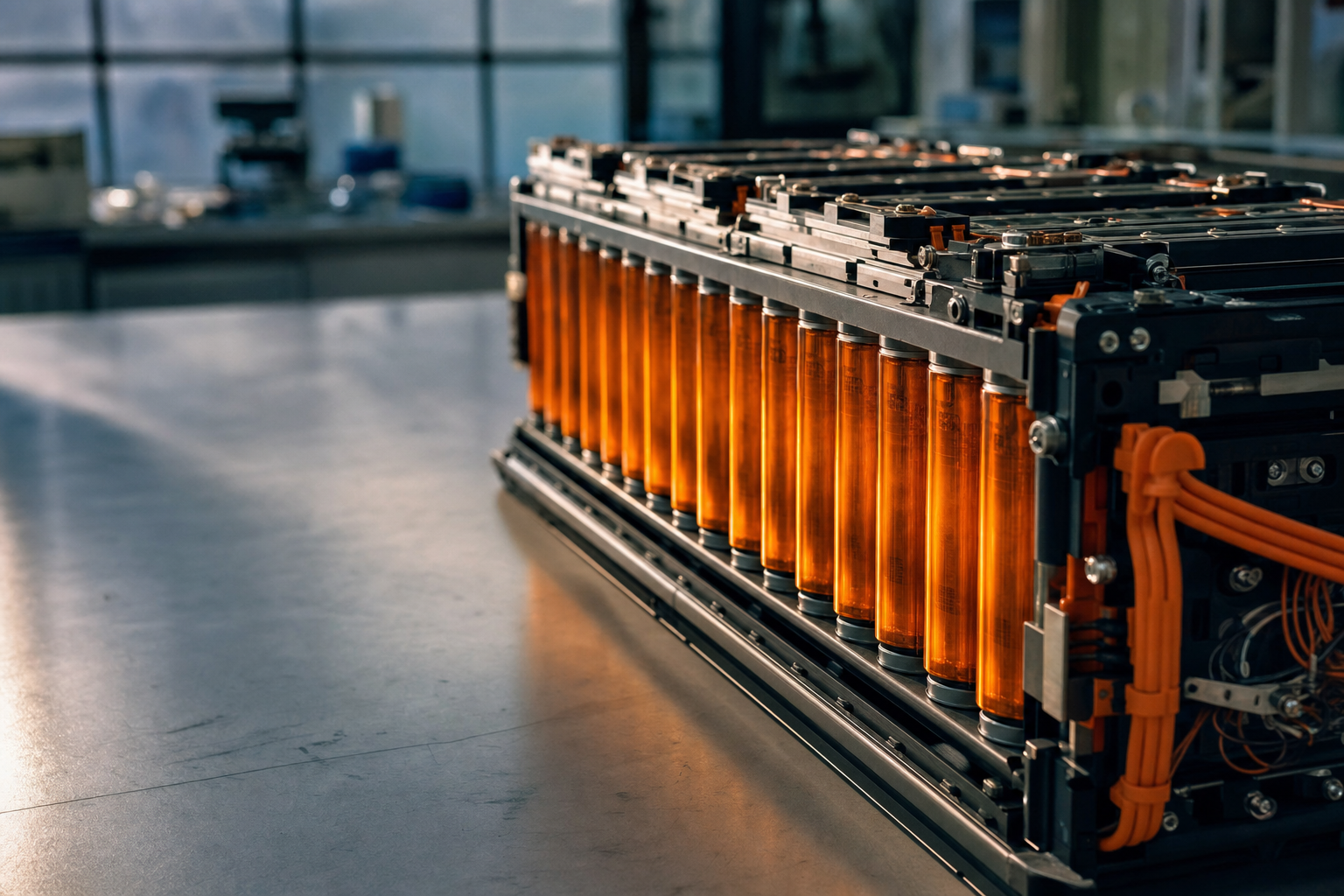
The story of our electrified century is written in lithium. From the smartphone in your pocket to the electric vehicle in your driveway, the lightweight, energy-dense lithium-ion battery has been the undisputed king, a technology so transformative it earned its creators a Nobel Prize in Chemistry.
But a king's reign is never eternal. The global rush to electrify everything has exposed the monarchy's fragile foundations: a supply chain concentrated in a few nations, volatile price spikes, and persistent environmental and ethical concerns tied to mining. The world needs a truly staggering number of batteries, and it is becoming painfully clear that lithium alone may not be enough, or at least not enough at a price the world can afford.
Now, a quiet contender is stepping out of the shadows. It relies on an element so common it's in the oceans beneath our feet and on the tables where we eat. This is the dawn of the sodium-ion era, a battery technology long relegated to academic papers that is now poised for a commercial breakout, driven by breakthroughs in materials science and the brute force of industrial giants. It isn’t a direct replacement for lithium, but something potentially more disruptive: a democratic alternative that could fundamentally alter the economics of energy storage.
The Elementary Advantage: Why Sodium?
To understand the appeal of sodium-ion, one need only glance at the periodic table. Sodium (Na) sits directly below lithium (Li) in the first column, the alkali metals. This familial relationship means they share fundamental electrochemical properties, behaving as charge-carrying ions in a battery. For decades, this similarity made sodium an object of scientific curiosity. If lithium works so well, why not its cheaper, more abundant cousin?
The answer lies in both its blessings and its curses. The primary blessing is profound abundance. Sodium is the sixth most abundant element in the Earth's crust, over 1,000 times more common than lithium. It can be extracted from rock salt or, most tantalizingly, from seawater. This geographic ubiquity shatters the geopolitical chokepoints that define the a-called "Lithium Triangle" of Argentina, Bolivia, and Chile, as well as Australia and China's dominance in processing. A world powered by sodium is a world with a far more distributed and stable raw material base.
Furthermore, the chemistry allows for other cost-saving material swaps. The current collectors in a sodium-ion cell can be made of aluminum foil for both the cathode and the anode, whereas lithium-ion batteries require more expensive copper foil for the anode due to lithium's reactivity with aluminum. These may seem like small details, but when multiplied by the gigawatt-hours of production required for global energy transition, they translate into massive savings.
From Laboratory Curiosity to Commercial Reality
If sodium is so cheap and abundant, why are we only hearing about it now? For decades, the technology was hamstrung by a simple problem of physics: size. A sodium ion is about 25% larger in radius than a lithium ion. While that doesn't sound like much, in the tightly packed atomic lattice of an electrode, it's a colossal difference.
Early attempts to build sodium-ion batteries faced rapid failure. As the larger sodium ions forced their way into and out of the electrode materials—particularly the graphite anode standard in lithium-ion cells—they would cause the material to expand, crack, and degrade. The battery's capacity would plummet after just a handful of charge-discharge cycles. It was like trying to park a truck in a space designed for a compact car, over and over again. The garage eventually falls apart.
The breakthroughs have come on two fronts: the cathode and the anode. For cathodes, researchers have found success with materials like Prussian blue analogues and layered metal oxides, which have more spacious crystal structures capable of "intercalating" the bulkier sodium ions without sustaining damage. These materials are not only effective but are also composed of common elements like iron and manganese, further driving down cost and supply chain risk.
“The 'fat ion' problem made sodium a non-starter for years. The solution wasn't finding a way to shrink the ion, but engineering a more accommodating home for it. Advances in disordered 'hard carbons' for the anode were the final, crucial piece of the puzzle.”
The anode solution proved even more critical. Instead of the highly ordered crystalline graphite used in lithium-ion cells, scientists discovered that disordered, amorphous forms of carbon—known as "hard carbon"—were far superior. Derived from sources like biomass waste or petroleum byproducts, hard carbon features a random atomic structure with voids and defects of various sizes. This structural chaos is its greatest strength; it provides a range of differently sized spaces, easily accommodating the sodium ions without the stress that destroys graphite.
A New Industrial Map: Who Is Leading the Sodium Charge?
Scientific breakthroughs are one thing; industrial scale-up is another. The sodium-ion story has accelerated dramatically because its manufacturing process is strikingly similar to that of its lithium-ion predecessor. Companies can, with moderate retooling, adapt existing gigafactory production lines to build sodium-ion cells. This avoids the trillions of dollars and decade of investment it would take to build a new manufacturing ecosystem from scratch.
Unsurprisingly, the current global leader in battery manufacturing, China, is at the forefront. Contemporary Amperex Technology Co. Limited (CATL), the world's largest battery maker, stunned the industry in 2021 by unveiling its first-generation sodium-ion battery and has since announced mass production partnerships with automakers like Chery. Other Chinese players, including HiNa Battery and BYD, are also making significant headway, signaling a coordinated national strategy to dominate this next-gen chemistry.
But the race is not exclusively Chinese. In the United Kingdom, Faradion, one of the earliest pioneers in the space, has been developing its technology for over a decade and is now licensing it globally, including to Reliance Industries in India. In Sweden, Altris is commercializing a novel cathode material that is exceptionally safe and made from ultracommon resources. American startups are also entering the fray, often focusing on specific high-performance niches.
| Characteristic | Sodium-Ion (Na-ion) | Lithium-Iron-Phosphate (LFP) | Nickel-Manganese-Cobalt (NMC) |
|---|---|---|---|
| Typical Energy Density (Wh/kg) | 140–160 | 160–180 | 200–270+ |
| Estimated Cost ($/kWh) | ~$40–$60 | ~$70–$90 | ~$100–$130 |
| Cycle Life (Cycles to 80%) | 3,000–6,000 | 4,000–8,000+ | 1,000–3,000 |
| Safety (Thermal Runaway) | Excellent; low risk | Very Good; low risk | Fair; moderate risk |
| Key Material Scarcity | Very Low (Sodium, Iron) | Low (Lithium) | High (Cobalt, Nickel) |
Finding Its Place: Grid Storage and Beyond
The numbers in the comparison table tell a clear story. With a lower energy density, sodium-ion batteries are not an imminent threat to the high-performance nickel-manganese-cobalt (NMC) cells used in long-range premium electric vehicles. A 500-kilometer range EV would simply require a sodium-ion pack that is too large and heavy to be practical—for now.
But the automotive market is not a monolith. For smaller, more affordable city cars in markets like India, Southeast Asia, and parts of Europe, where daily commutes are shorter and cost is paramount, sodium-ion is a perfect match. The ability to shave several thousand dollars off the sticker price of an EV is a powerful market driver. The first sodium-ion EVs are already hitting the roads in China.
The most significant immediate impact, however, will likely be in stationary energy storage. To create a stable power grid based on intermittent renewables like solar and wind, utilities need to deploy massive battery farms to store energy when the sun is shining and release it when it's not. In this application, the physical size and weight of the battery (its gravimetric energy density) are largely irrelevant. The dominant factors are cost per kilowatt-hour, longevity (cycle life), and safety.
On these metrics, sodium-ion excels. Its excellent safety profile, with a much lower risk of thermal runaway (fires) than some lithium chemistries, makes it ideal for large-scale urban or utility installations. Its superior performance in cold weather is an added bonus. Most importantly, its low cost could finally make multi-gigawatt-hour storage projects economically viable without subsidies, unlocking the full potential of renewable energy.
Projected Na-ion Share of New Stationary Storage Deployments
Beyond these two huge markets, a constellation of other applications awaits: electric two-wheelers, home energy storage systems, data center backup power, and industrial machinery. Anywhere that low cost and high safety are more important than minimizing weight, sodium-ion presents a compelling business case.
The rise of the sodium-ion battery is not a story about a 'lithium killer.' It is a narrative of diversification and maturation. The energy storage landscape is becoming more complex, nuanced, and ultimately, more resilient. Lithium-ion will continue to dominate applications where sheer energy density is paramount. But for a vast and growing segment of the market, the humble power of salt offers a solution that is good enough, cheap enough, and abundant enough to accelerate the global energy transition.
This elemental shift challenges the notion that a single silver-bullet technology will solve our energy woes. Instead, the future will be built on a portfolio of solutions, each tailored to its best use case. By freeing ourselves from a singular reliance on lithium, we are not just building a better battery; we are building a more stable and equitable energy system for a world in desperate need of one.
Featured Research
The End of the Farm as We Know It: The Quiet Revolution of Precision Fermentation
7 min read

The Silent Terminals: What Ghost Airports Reveal About Our Broken Dreams of Flight
7 min read

The Living Breakwaters Remaking Our Carbon-Soaked Coastlines
6 min read
The Digital Harvest: Who Owns the Data From a Smart Farm?
7 min read