What Is a Large Language Model and How Does It Work?
Beyond the hype, these powerful AI systems are reshaping how we interact with information, but their inner workings remain a mystery to many—here's a simple breakdown.

A large language model, or LLM, is a type of artificial intelligence trained on vast quantities of text data to understand, generate, and interact in human-like language. It functions by calculating the most probable next word in a sequence, a deceptively simple mechanism that enables it to perform complex tasks like summarization, translation, and answering questions. This core technology powers an array of modern AI applications, including OpenAI's ChatGPT, Google's Gemini, and Anthropic's Claude.
What is a large language model in simple terms?
At its core, a large language model is a highly advanced predictive text system, operating on a mind-boggling scale. Think of the auto-complete on your phone that suggests the next word in your text message. An LLM does the same thing, but it's been trained on a library of information equivalent to a significant portion of the internet, allowing it to generate entire paragraphs, essays, or lines of code that are coherent and contextually relevant.
The 'large' in the name refers to two things: the immense size of the dataset it learns from and the number of 'parameters' within the model itself. Parameters are the variables the model uses to make its predictions, acting like the knobs and dials that are tuned during the training process. While an early model like GPT-2 (released in 2019) had 1.5 billion parameters, modern frontier models like GPT-4 are estimated to have over a trillion, representing a massive leap in complexity and capability. This scale allows them to capture intricate patterns, grammar, facts, and even styles of reasoning from the data they process.
These are not simple databases or search engines. Instead of retrieving pre-existing information verbatim, LLMs 'generate' their responses word by word based on statistical probabilities. This generative ability is what separates them from previous generations of natural language processing (NLP) AI, enabling them to create novel content that did not exist in their training data in that exact form.
How are large language models trained?
Training a large language model is a multi-stage, resource-intensive process that can be broken down into two main phases: pre-training and fine-tuning. The first phase builds a broad base of knowledge, while the second refines the model to be more helpful, harmless, and aligned with human instructions.
The pre-training phase is unsupervised, meaning the model learns directly from raw, unlabeled text. Developers feed it a colossal dataset—often hundreds of terabytes of data from sources like Common Crawl (a repository of the public web), digital books, and Wikipedia. The model's task is simple: predict the next word in a sentence or fill in randomly masked words. By repeating this task billions of times, the model internally builds a complex statistical representation of language, including grammar, facts, reasoning abilities, and semantic relationships. This stage is computationally astronomical, often costing tens to hundreds of millions of dollars and requiring thousands of high-end GPUs from companies like NVIDIA running for weeks or months.
After pre-training, the model is a powerful but raw tool that may produce unhelpful, unsafe, or nonsensical outputs. The fine-tuning phase aims to fix this. A key technique used here is Reinforcement Learning with Human Feedback (RLHF). In this process, human labellers rank different model responses to the same prompt, teaching the AI what constitutes a 'good' answer. This feedback is used to train a separate 'reward model', which then guides the LLM to generate responses that are more likely to be preferred by humans. More recent techniques like Direct Preference Optimization (DPO) are making this alignment process more efficient. This is the crucial step that transforms a general prediction engine into a useful assistant like ChatGPT.
What are the main applications of LLMs?
The versatile, generative capabilities of LLMs have unlocked a vast range of applications across nearly every industry. Their primary use cases revolve around understanding, generating, and transforming text and code, making them powerful tools for communication, creativity, and analysis.
The most visible application is in advanced conversational AI and chatbots. Products like OpenAI's ChatGPT, Google's Gemini, and Anthropic's Claude provide sophisticated assistants that can answer complex questions, draft emails, and engage in nuanced dialogue. This technology is also fundamentally changing information retrieval. Services like Perplexity AI and Microsoft's Copilot (integrated into Bing) use LLMs to synthesize information from multiple web sources into a single, cohesive answer, moving beyond a simple list of links.
In the world of software development, LLMs are becoming indispensable co-pilots. Tools like GitHub Copilot, integrated directly into a programmer's editor, can suggest lines of code, complete entire functions, and even debug errors, dramatically accelerating development cycles. An estimated 92% of US-based developers are already using AI coding tools in some capacity. Similarly, in creative and business fields, platforms like Jasper and Copy.ai leverage LLMs to generate marketing copy, blog posts, and social media updates. Beyond content creation, they are used for more analytical tasks, such as summarizing dense legal contracts, analyzing customer sentiment from reviews, or rapidly reviewing scientific literature.
“LLMs represent a fundamental shift from discriminative AI, which classifies data, to generative AI, which creates new data. This transition is as significant as the invention of the microprocessor.”
What are the biggest limitations and risks?
Despite their remarkable abilities, large language models have significant limitations and pose serious risks that researchers and policymakers are actively grappling with. The three most prominent concerns are factual inaccuracy (hallucinations), ingrained bias, and the immense resource cost of their operation.
LLMs are prone to 'hallucinations'—confidently generating plausible but completely false information. Because they are designed to produce statistically likely word sequences rather than consult a factual database, they can invent facts, events, and citations. This became a high-profile issue when a US law firm was sanctioned after its lawyers used ChatGPT to prepare a legal brief that included citations to entirely fabricated court cases. For tasks requiring high factual accuracy, this makes unsupervised use of LLMs dangerous.
Another deep-seated problem is bias. LLMs learn from a snapshot of the internet, which includes vast amounts of biased, stereotypical, and toxic content. Without careful mitigation, the models can absorb and amplify these societal biases related to race, gender, and culture. For example, a model might associate certain job roles predominantly with one gender or produce stereotyped descriptions of ethnic groups. While companies invest heavily in safety filters, tackling bias at its source within the training data is an ongoing and complex challenge, and one that regulators, such as those behind the EU AI Act, are closely watching.
Finally, the scale of LLMs comes at a staggering cost. The computational power required for training and running these models consumes vast amounts of electricity and generates a significant carbon footprint. A 2022 study from Stanford University estimated that training a single large model could emit over 250,000 kg of CO2 equivalent, comparable to the emissions of over 100 round-trip flights between London and New York. This not only raises environmental concerns but also concentrates power in the hands of a few corporations in the US and China that can afford the massive server farms and specialized hardware required.
| Model Size | Parameter Count | Typical Use Case | Estimated Training Cost (USD) |
|---|---|---|---|
| Small | 1-7 Billion | On-device tasks, simple chatbots, text classification | < $100,000 |
| Medium | 10-70 Billion | General purpose APIs, most open-source models (e.g., Llama 3 70B) | $1M - $10M |
| Large / Frontier | 100B - 1T+ | Flagship products (GPT-4, Gemini), frontier research | $50M - $250M+ |
| Specialized | Varies (often <50B) | Fine-tuned for specific domains like medicine, law, or finance | Varies + Fine-tuning cost |
Exponential Growth in LLM Parameter Counts
Frequently asked questions
Is ChatGPT an LLM?
Yes, ChatGPT is a specific application built on top of a series of large language models developed by OpenAI, most notably the GPT-3.5 and GPT-4 families of models. The acronym 'GPT' itself stands for 'Generative Pre-trained Transformer,' which describes the core architecture of the underlying AI.
Can large language models think or understand?
Large language models do not 'think' or 'understand' in the same way humans do. They are exceptionally complex pattern-matching systems that predict probable sequences of words based on their training data. While their output can appear highly intelligent and context-aware, they lack consciousness, self-awareness, or genuine comprehension of the concepts they are processing.
Are all large language models open source?
No, many of the most powerful large language models are proprietary and closed-source, such as OpenAI's GPT-4 and Google's Gemini Ultra. However, there is a vibrant open-source movement with highly capable models like Meta's Llama series and Mistral AI's models, which allows researchers and developers to access, study, and build upon the underlying code and weights.
What is the difference between an LLM and general AI?
A large language model is a form of 'narrow AI,' meaning it is highly specialized in language-related tasks. Artificial General Intelligence (AGI) is a hypothetical future AI that would possess the ability to understand or learn any intellectual task that a human being can. While LLMs are a major advancement, they are a step on the path, not the destination of AGI.
How much data is used to train an LLM?
Training a state-of-the-art LLM involves colossal amounts of data, typically measured in tokens (a word or part of a word). For scale, a model like GPT-3 was trained on nearly 500 billion tokens from sources like the Common Crawl dataset, which archives a large portion of the public internet. This amounts to hundreds of terabytes of raw text information.
How did this land?
Related Reading

The Digital Harvest: Who Owns the Data From a Smart Farm?
As AI-driven precision agriculture promises a new green revolution, farmers are discovering they may be sowing the seeds of their own digital serfdom on their own land.
7 min read
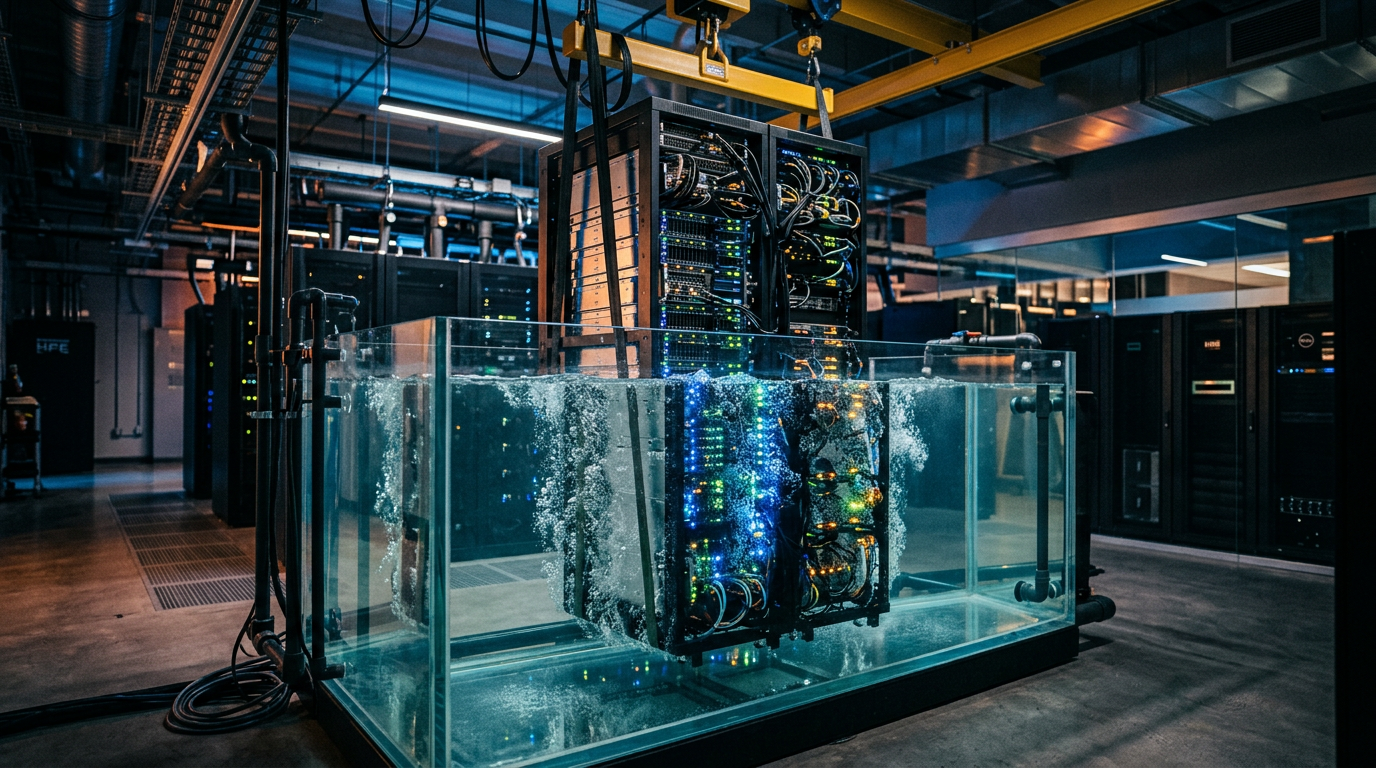
The Great Cooling: AI's Future Is Tied to a New Thermal Economy
As artificial intelligence demands ever more computational power, the industry faces a thermodynamic wall, sparking a global race for radical new cooling technologies and climate-advantaged locations.
7 min read
More by this writer — Dr. Evelyn Reed
→
Featured Research

The Complete Guide to Using eSIMs for International Travel
9 min read

What Is Dopamine Dressing and How Does It Actually Work?
7 min read

The Complete Guide to Fusion Energy: Will It Power Our Future?
9 min read

Solid-State vs. Lithium-ion Batteries: Which Technology Will Power the Future?
7 min read