The End of the Farm as We Know It: The Quiet Revolution of Precision Fermentation
A new wave of cellular agriculture is poised to replace traditional animal farming not with plants, but with microbes programmed to create identical proteins, upending global commodity markets.
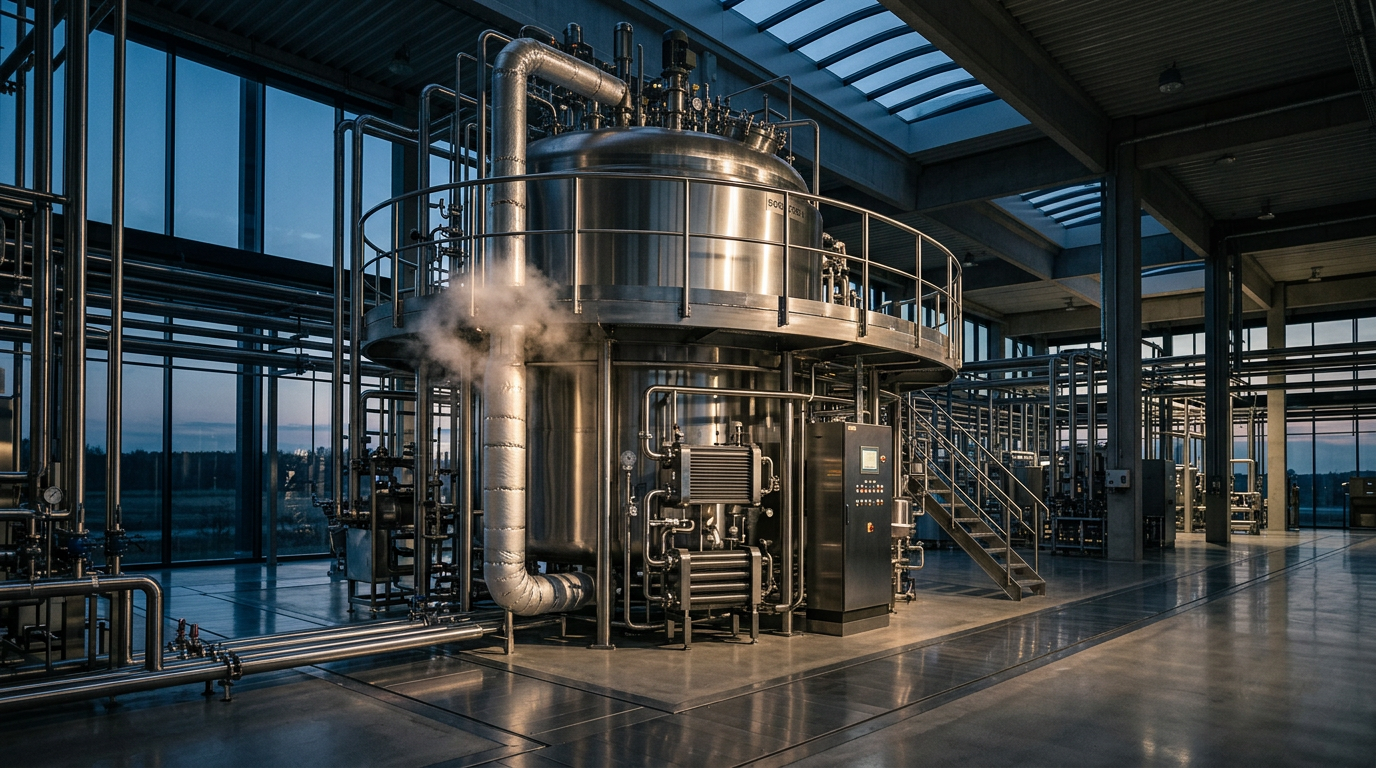
Consider the whey protein isolate in your post-workout shake. It is a pure, functional powder, an emblem of modern food science. Its journey to your shaker bottle begins, we assume, on a dairy farm. It is a relic of the cow, a byproduct of cheesemaking, refined from liquid milk. But what if its origin story involved no farm, no pasture, and no animal at all? What if this biologically identical whey was brewed, much like beer, in gleaming steel vats, its molecular blueprint downloaded into yeast?
This is not a far-future-fiction. It is the commercial reality of precision fermentation, a technology that has quietly moved from pharmaceutical labs to the front lines of the food industry. While plant-based burgers have captured the public imagination, precision fermentation represents a more fundamental, and potentially more disruptive, shift. It isn’t about mimicking meat with vegetables; it's about producing the exact same animal proteins—whey, casein, egg albumin—using microorganisms as microscopic factories. The end product is not an 'alternative'; it is a molecular copy, bio-identical to what's churned out by industrial animal agriculture.
I. From Ancient Craft to Molecular Foundry
Fermentation itself is an ancient craft, the microbial magic behind bread, wine, and cheese. Traditional fermentation uses microorganisms to transform a raw ingredient—grapes into wine, milk into yogurt. Precision fermentation, however, gives the microbes a far more specific task. Scientists can now edit the genetic code of a common microorganism, such as yeast or fungi, inserting the DNA sequence that acts as a blueprint for a target protein. For example, the gene for whey protein from a cow can be inserted into a yeast cell.
This modified yeast is then placed in a fermenter, a large tank filled with a nutrient-rich broth of water, sugar, and vitamins. The yeast consumes the sugar and, following its new genetic instructions, produces the desired protein as a byproduct. After a few days, the resulting broth is filtered, separating the target protein from the microorganisms. The result is a pure protein powder, free from lactose, hormones, and antibiotics, and identical to the one derived from an animal. The 'how' is a marvel of biotechnology, but the 'what' is simple: it decouples protein production from the animal itself.
This process has been the backbone of the biopharmaceutical industry for decades, used to produce insulin, enzymes, and other complex medicines. For over 30 years, 90% of the rennet used in cheesemaking has been produced via precision fermentation, supplanting the traditional method of extracting it from the stomachs of slaughtered calves. What’s new is the ambition and the target. Companies like California-based Perfect Day are producing whey and casein for milk and ice cream. The EVERY Company is creating egg whites for baking and nutrition. These are not niche ingredients; they are foundational commodities of our global food system.
II. The Unforgiving Economics of Disruption
The core of the disruption thesis lies not in novelty but in economics. Animal agriculture is a biologically inefficient system. A cow must be born, raised, fed, and sheltered for years, consuming vast amounts of land, water, and feed to produce milk and meat. It is a system fundamentally bound by the slow, messy, and vulnerable realities of biology. Precision fermentation, by contrast, operates on the logic of technology, where costs tend to fall predictably over time.
Proponents, like the think tank RethinkX, argue that proteins will follow a 'foods-as-software' model. In this model, once a protein's genetic code is sequenced and the microbe is developed (a fixed R&D cost), it can be replicated infinitely at decreasing marginal cost. The cost of production becomes a function of the cost of the fermenter (capital) and the feedstock (sugar). As biotech methods improve and fermentation capacity scales, the cost of precision-fermented proteins is projected to plummet, eventually undercutting animal-derived proteins significantly.
This isn't just about premium consumer goods. The biggest impact will be on the business-to-business (B2B) market, where proteins are traded as functional ingredients for everything from baked goods and infant formula to nutritional supplements. Food giants like General Mills and Nestlé make purchasing decisions based on cost, functionality, and supply chain stability. When a bio-identical, price-competitive, and stably-supplied protein becomes available, the decision to switch from the volatile agricultural commodity market becomes a simple matter of spreadsheet logic. The resource efficiency of the process, as detailed below, provides a powerful impetus.
| Metric (per kg protein) | Conventional Dairy Source | Precision Fermentation Source | Estimated Reduction |
|---|---|---|---|
| Land Use (m²) | ~670 | ~0.8 | >99% |
| Water Use (liters) | ~25,000 | ~550 | ~98% |
| GHG Emissions (kg CO₂e) | ~50 | ~2.5 | ~95% |
| Energy Use (MJ) | ~380 | ~140 | ~63% |
| Production Time | ~24 months (heifer to milk) | ~3 days (fermentation cycle) | >99% |
III. A Food System Decoupled
The implications extend far beyond the farm gate. The current food system is built around the geography and logistics of animal agriculture. Entire regional economies, transport networks, and financial markets are dedicated to raising, processing, and distributing animal products. Precision fermentation erodes the geographic constraints of production. A dairy protein facility can be built anywhere with access to electricity, water, and sugar—next to a food processing plant in Ohio, in a Singaporean industrial park, or in a desert metropolis like Dubai.
This geographic freedom promises a new kind of food security. Nations heavily reliant on imported milk powder or other protein commodities could domesticate their supply chains, making them resilient to shipping disruptions, trade disputes, and climate events that affect agriculture elsewhere. However, it also threatens to dismantle the economies built on agricultural exports. What happens to New Zealand's dairy industry or Argentina's beef sector if their primary products can be produced more cheaply and efficiently anywhere in the world?
“We're not just replacing the cow; we're decoupling protein production from land and animal biology entirely. The geopolitical implications for national food security are staggering.”
The value chain itself will be reconfigured. Industries centered on animal slaughter, veterinary medicine, refrigerated transport for carcasses, and commodity trading of livestock futures face existential threats. In their place, new industries will rise: bioreactor manufacturing, feedstock processing, microbial strain development, and high-tech food ingredient purification. The labor force will shift from farm hands and meatpackers to chemical engineers, microbiologists, and data scientists. This isn't a one-for-one replacement; it's a fundamental restructuring of the skills and capital required to feed the planet.
IV. The Hurdles on the Road to Scale
Despite the bullish projections, the path to dominance is fraught with immense challenges. The first and most significant is scale. While the technology is proven, the global infrastructure to produce proteins at a planetary scale does not yet exist. Building the required fermentation capacity—hundreds of facilities each housing bioreactors the size of several-story buildings—will demand hundreds of billions of dollars in capital expenditure. It's a classic chicken-and-egg problem: large food companies won't commit to offtake agreements until the capacity is proven, but investors are hesitant to fund that capacity without guaranteed buyers.
The second challenge is the feedstock. Precision fermentation runs on sugar, a simple carbohydrate for the microbes to consume. A full-scale global transition would require a staggering amount of sugar or other carbon sources. While this could come from hyper-efficient crops like sugar beets or corn, or even from cellulosic sources like wood pulp, it raises its own questions about land use and the potential for creating new, damaging monocultures. The sustainability of the input will ultimately determine the sustainability of the output.
Projected Growth of the Global Precision Fermentation Market (Food & Beverage)
Finally, there are the human factors of regulation and consumer acceptance. In the US, the Food and Drug Administration (FDA) has granted 'Generally Recognized As Safe' (GRAS) status to several precision-fermented proteins, paving the way for commercialization. However, labeling conventions are still being debated. Should the product be called 'non-animal whey' or 'microbe-fermented whey'? The nomenclature will be critical in shaping public perception. While initial products have found success with early adopters, mainstream acceptance from consumers who are not motivated by ethical or environmental concerns will hinge on two timeless factors: price and taste. The technology must deliver a product that is not just cheaper, but indistinguishable or superior in function.
The transition, then, is not inevitable, but it is underway. The convergence of computational biology, artificial intelligence for strain optimization, and advanced engineering is accelerating progress at a pace that traditional agriculture cannot match. The economic and environmental logic is potent. For investors, policymakers, and business leaders, the question is no longer *if* this technology will reshape our food systems, but *how* to navigate the profound disruption it will bring. Managing this transition—from the farm to the factory, from biology to biotechnology—may be one of the most significant economic challenges and opportunities of the 21st century.
Related Reading

Featured Research
Beyond Lithium: How Common Salt Is Quietly Powering the Next Battery Revolution
7 min read

The Silent Terminals: What Ghost Airports Reveal About Our Broken Dreams of Flight
7 min read

The Living Breakwaters Remaking Our Carbon-Soaked Coastlines
6 min read
The Digital Harvest: Who Owns the Data From a Smart Farm?
7 min read