How to Navigate the Quantum Cryptography Landscape in 2026
Discover how businesses and individuals can prepare for and leverage quantum cryptography to secure data against future quantum threats.

Navigating the rapidly evolving quantum cryptography landscape in 2026 requires a proactive understanding of its principles, emerging technologies, and strategic adoption pathways. Quantum cryptography harnesses the fundamental laws of quantum mechanics to establish inherently secure communication, making it impervious to even the most powerful future quantum computers. It offers a crucial defense against cryptographic attacks that classical computing cannot withstand, fundamentally redefining data security for governments, corporations, and individuals alike. As quantum computing advances, understanding and implementing quantum-safe solutions is no longer a theoretical exercise but a pragmatic necessity for safeguarding sensitive information.
Step 1: Understand the Quantum Threat to Current Cryptography
The foundational algorithms underpinning much of today’s digital security, such as RSA and ECC (Elliptic Curve Cryptography), rely on the computational difficulty of factoring large numbers or solving discrete logarithms. While impossibly hard for classical computers, quantum computers equipped with Shor’s algorithm could theoretically break these public-key cryptosystems within hours or even minutes. This 'quantum threat' means that any data encrypted with current methods could one day be retroactively decrypted by future quantum machines, rendering past and present communications vulnerable. Researchers at the University of Waterloo predict a significant risk window opening as early as the late 2020s, making preparedness critical.
This impending vulnerability impacts a vast array of secure communications, from financial transactions and national security secrets to personal data and critical infrastructure control systems. The 'Harvest Now, Decrypt Later' phenomenon is particularly concerning, where adversaries may be passively collecting encrypted data today, intending to decrypt it once sufficiently powerful quantum computers become available. Therefore, understanding the specific cryptographic assets and data types at risk within your organisation is the very first step toward building a quantum-safe future.
Step 2: Differentiate Between Quantum Key Distribution (QKD) and Post-Quantum Cryptography (PQC)
Quantum cryptography broadly encompasses two primary approaches: Quantum Key Distribution (QKD) and Post-Quantum Cryptography (PQC). QKD is a hardware-based solution that uses quantum mechanical properties, such as photon polarisation or entanglement, to create and distribute cryptographic keys in a way that detects any attempt at eavesdropping. If an eavesdropper interferes, the quantum state is disturbed, immediately alerting the communicating parties. This makes QKD keys theoretically unhackable, offering 'information-theoretic security' for key exchange.
PQC, on the other hand, refers to new classical cryptographic algorithms designed to be resistant to attacks by both classical and quantum computers. These algorithms are software-based and can be implemented on existing computing infrastructure. The U.S. National Institute of Standards and Technology (NIST) has been leading a global standardisation effort for PQC algorithms since 2016, with final standards for several algorithms expected in 2024-2026. While PQC doesn't offer the absolute unhackability of QKD, it provides a much more flexible and scalable solution for securing a broader range of applications.
| Feature | Quantum Key Distribution (QKD) | Post-Quantum Cryptography (PQC) |
|---|---|---|
| Principle | Quantum mechanics for key exchange | Classical algorithms resistant to quantum attacks |
| Implementation | Hardware-dependent (photonic systems, fibre optics) | Software-based, compatible with existing systems |
| Security Guarantee | Information-theoretically secure key exchange | Computational security against quantum algorithms |
| Deployment Scope | Point-to-point secure links, specialized network segments | Broad range of applications, scalable enterprise-wide |
| Cost & Complexity | Higher initial cost, infrastructure specific | Lower initial cost, easier integration |
| Typical Use Cases | Government communications, critical infrastructure, financial institutions | TLS/SSL, digital signatures, VPNs, general data encryption |
Step 3: Inventory Your Cryptographic Assets and Risk Profile
Before implementing quantum-safe solutions, organisations must conduct a thorough inventory of all cryptographic assets. This includes identifying where encryption is used (e.g., VPNs, cloud storage, databases, IoT devices), what algorithms are employed, which keys are generated and how, and what data is protected. Moreover, a comprehensive risk assessment must quantify the impact of a quantum attack on each asset. For instance, data with a long shelf-life, such as medical records or intellectual property, requires immediate attention, as it is most vulnerable to 'Harvest Now, Decrypt Later' attacks.
Leading cybersecurity firms like Gartner recommend performing a 'crypto-agility' assessment to determine how easily your systems can swap out existing cryptographic primitives for new, quantum-resistant ones. This assessment should encompass both internal systems and external dependencies, including vendor solutions and cloud services. A typical large enterprise might use hundreds or even thousands of cryptographic endpoints, making a systematic approach vital. In some cases, over 60% of an organisation's cryptographic footprint might be hidden or poorly documented, posing significant challenges for migration.
Step 4: Pilot Quantum Key Distribution (QKD) for Ultra-Sensitive Links
For organisations handling exceptionally sensitive data or operating critical infrastructure, piloting QKD technologies can provide an unparalleled level of security for specific point-to-point communication links. QKD systems are becoming commercially available from companies like Toshiba and ID Quantique, offering secure key exchange over fibre optic networks for distances up to hundreds of kilometres. For instance, in 2023, the European Union's EuroQCI initiative successfully demonstrated cross-border QKD links, showcasing its viability for pan-European secure communications.
““The deployment of quantum key distribution networks is not just a technological leap; it’s a strategic imperative for nations and critical industries aspiring to truly future-proof their digital sovereignty in the quantum era.””
While QKD is currently expensive and infrastructure-dependent, its use cases include securing data centres, government communications, financial trading networks, and critical national infrastructure. A pilot project can help evaluate the practicality, performance, and integration challenges within your specific operational environment, preparing your technical teams for broader adoption as costs decrease and technology matures.
Step 5: Develop a Migration Strategy for Post-Quantum Cryptography (PQC)
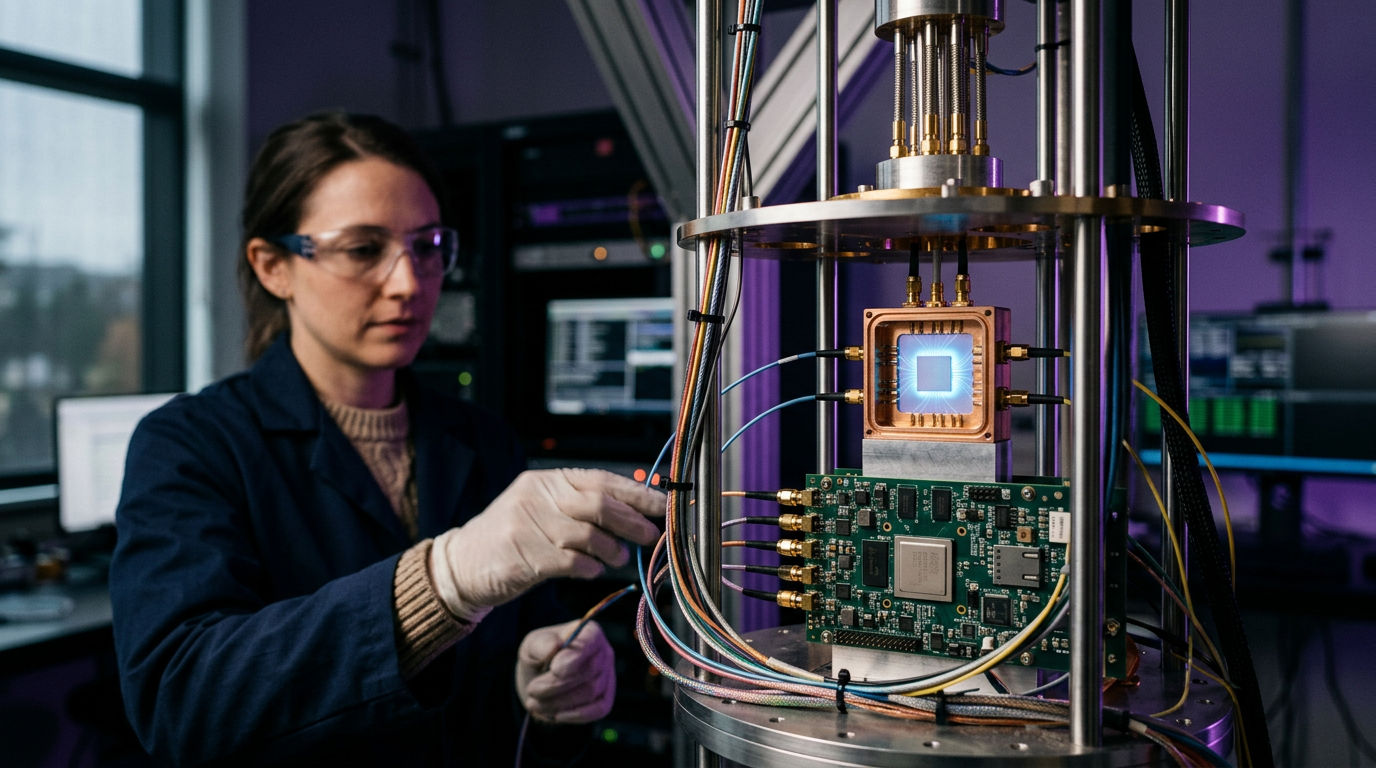
The most pervasive threat requires the most pervasive solution: PQC. Based on the NIST standardisation process, organisations should begin formulating a comprehensive migration strategy. This involves selecting appropriate PQC algorithms (e.g., lattice-based, code-based, hash-based signatures) from the standardised portfolio and planning their integration into existing software and hardware. The process is complex, often requiring cryptographic agility layers or hybrid modes that combine classical and PQC algorithms during a transition phase.
A phased rollout is often recommended, starting with non-critical systems, then moving to less sensitive public-facing services, and finally tackling core infrastructure. Training development teams and cybersecurity professionals on PQC principles and implementation best practices is crucial. The total cost of migrating a large enterprise to PQC could range from hundreds of thousands to several million US dollars, depending on complexity and scale, making budget allocation and long-term planning essential. Many organisations in the financial sector, particularly in the US and UK, are aiming for initial PQC integration into critical systems by 2027.
Projected Global Investment in Quantum Cryptography
Step 6: Engage with Standards Bodies and Quantum Security Specialists
Staying current with international standards and best practices is paramount. Actively engage with organisations like NIST, ETSI (European Telecommunications Standards Institute), and ISO (International Organization for Standardization) to monitor the evolution of PQC algorithms and QKD protocols. These bodies provide critical guidance and frameworks that will shape future cryptographic implementations. Furthermore, collaborate with specialist quantum security vendors and consultants who possess the deep expertise required to navigate this complex domain.
Universities and research institutions, such as the Quantum Communications Hub in the UK or the Institute for Quantum Computing in Canada, are also at the forefront of quantum cryptography research. Forming partnerships or sponsoring research can provide early access to cutting-edge developments and help ensure your organisation remains ahead of emerging threats and solutions. The quantum cryptography landscape is still maturing, and a collaborative approach is often the most effective way to address its challenges.
Step 2.5: Your Quantum Cryptography Preparedness Checklist
To summarise your journey towards quantum-safe security:
Frequently asked questions
What is quantum cryptography?
Quantum cryptography is a field of cybersecurity that applies quantum mechanics principles to ensure secure communication. It focuses on creating communication methods that are fundamentally immune to eavesdropping, even from quantum computers. The most well-known application is Quantum Key Distribution (QKD), which generates and exchanges cryptographic keys with inherent security guarantees.
How does quantum key distribution (QKD) work?
QKD works by exchanging cryptographic keys using the quantum states of photons. If an eavesdropper attempts to intercept these photons, their quantum state is irrevocably altered, immediately alerting the communicating parties. This means any interference is detected, and the key exchange can be aborted and restarted, ensuring the integrity and secrecy of the shared key.
What is post-quantum cryptography (PQC)?
Post-quantum cryptography (PQC) refers to new classical cryptographic algorithms designed to resist attacks from both classical and quantum computers. Unlike QKD, PQC is software-based and can run on existing computer infrastructure. These algorithms are being standardized by organisations like NIST to provide quantum-resistant encryption without requiring quantum hardware.
When will quantum computers break current encryption?
The exact timeline for quantum computers breaking current encryption is uncertain, but many experts predict it could occur by the late 2020s or early 2030s. The 'Harvest Now, Decrypt Later' threat means sophisticated adversaries may already be collecting encrypted data today, anticipating future decryption capabilities. Therefore, proactive migration to quantum-safe solutions is advisable for long-term data security.
Is quantum cryptography expensive to implement?
Implementing quantum cryptography can involve significant costs. QKD systems require specialised hardware and infrastructure, making them expensive for widespread deployment during their current stage of development. PQC, while software-based, still incurs costs related to algorithm migration, system integration, testing, and workforce training. However, these costs are often outweighed by the potential financial and reputational damage of a quantum-enabled security breach.
Which industries should prioritise quantum cryptography?
Industries dealing with highly sensitive, long-lived data or critical infrastructure should prioritise quantum cryptography. This includes defence and national security, finance (banking, investment), healthcare (patient records), telecommunications, and government agencies. Any organisation with intellectual property, trade secrets, or critical operational technology infrastructure is also at high risk and should begin preparing.
How did this land?
Related Reading
The Complete Guide to Fusion Energy: Will It Power Our Future?
From recreating the sun on Earth to the promise of limitless clean power, this guide breaks down the science, key players, and massive hurdles of fusion energy.
9 min read
Beyond Lithium: How Common Salt Is Quietly Powering the Next Battery Revolution
As the world scrambles for lithium, a cheaper, more abundant, and safer alternative—the sodium-ion battery—is finally moving from the lab to the factory floor, reshaping our energy future.
7 min read
More by this writer — Dr. Eleanor Vance
→
Featured Research

What Is Cultural Tourism and Why Does It Matter in 2026?
7 min read

Vector Databases vs. Traditional Databases: Which Is Best for AI?
7 min read

Unearthing the Supercontinent Cycle: Earth's Rhythmic Reshaping
5 min read

5 Myths About Housing Affordability: Separating Fact From Fiction
6 min read