A 2026 Breakdown of Commercial Space Stations Beyond the ISS
With the International Space Station nearing retirement, a new era of private commercial space stations is emerging, driven by innovation and diverse economic models.
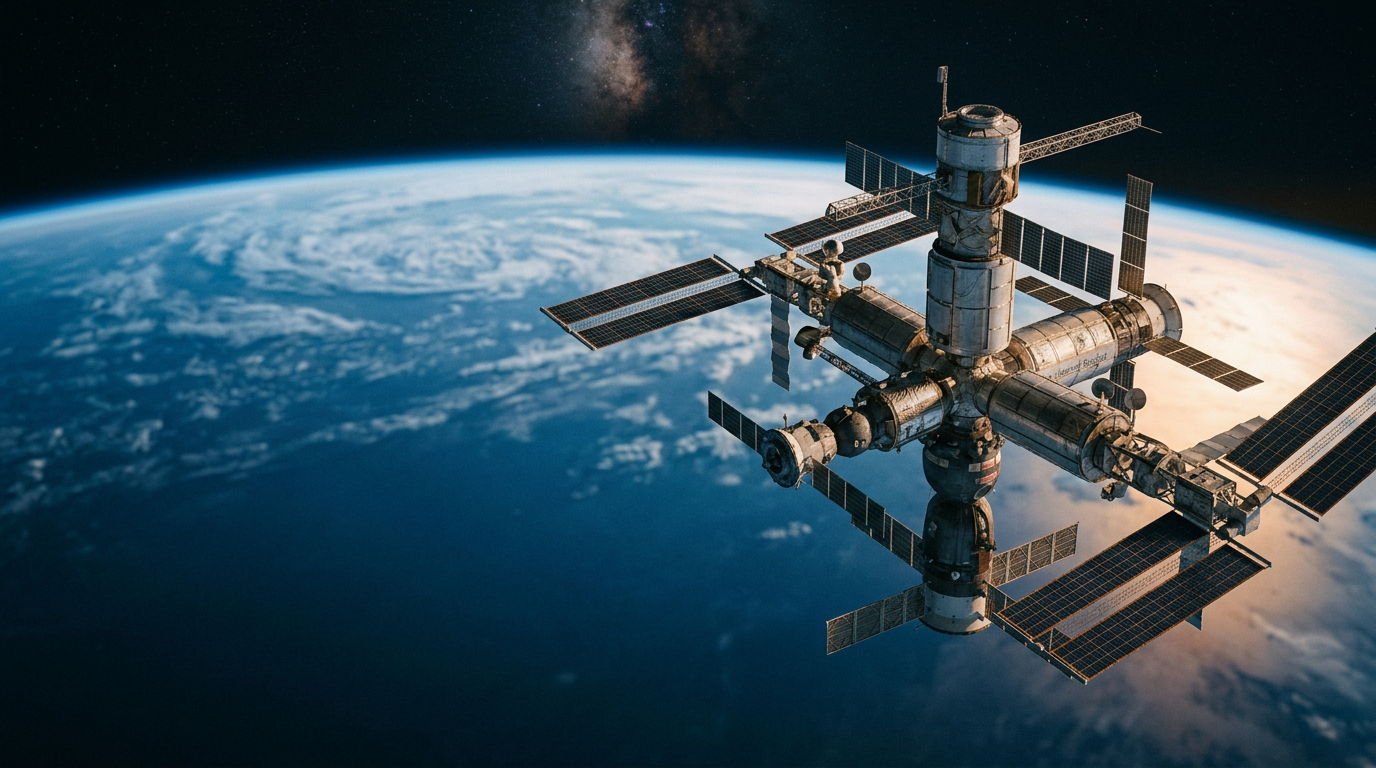
As the International Space Station (ISS) approaches its anticipated decommissioning, the vacuum it leaves in low-Earth orbit (LEO) is rapidly being filled by ambitious private ventures aiming to establish the next generation of commercial space stations. These privately funded and operated platforms are designed not just for government-sponsored scientific research, but for a diverse range of activities including space tourism, in-orbit manufacturing, media production, and private research, fundamentally reshaping humanity's presence beyond Earth by 2026 and beyond. This shift signals a pivotal moment for space commercialisation, moving from government-led infrastructure to a more dynamic, market-driven ecosystem.
The transition from public to private ownership in LEO infrastructure is not merely a change in funding model; it represents a paradigm shift in how we conceive of and utilise space. With NASA and other international space agencies increasingly focusing on deep space exploration, commercial entities are stepping up to provide essential LEO platforms, fostering competition and innovation. This article explores the leading contenders and trends defining this exciting new era.
The Axiom Station: Modular Expansion and Commercial Hubs
Axiom Space, a Houston-based company, is perhaps the most advanced in its plans for a commercial space station. Their strategy involves a phased approach, initially attaching their modules to the existing ISS. The Axiom Segment, beginning with Axiom Station Module 1 (AxH1) targeted for launch by 2026, will serve as a commercial extension of the ISS, providing private astronaut missions, dedicated research facilities, and even eventually becoming a free-flying independent space station after the ISS is decommissioned. Axiom aims to offer a full-service platform, from crew training to mission operations.
Why it matters: Axiom's approach leverages existing ISS infrastructure, providing a smoother transition and immediate revenue streams. Their modular design allows for scalable growth, catering to a diverse clientele from national space agencies requiring microgravity research labs to private companies exploring in-space manufacturing of fibre optics or pharmaceuticals. This hybrid model helps de-risk early operations while building towards a fully autonomous private station, potentially serving as a blueprint for future commercial space development. The company has already completed multiple private astronaut missions to the ISS, demonstrating their operational capabilities.
“The future of humanity in low-Earth orbit is commercial, and we are building the highway. Our station will be a continuously evolving platform, adaptable to the needs of science, industry, and exploration.”
Vast's Haven-1: The World's First Commercial Space Station
Vast, founded by entrepreneur Jed McCaleb, has an ambitious goal: to launch the world's first independent commercial space station, Haven-1, by August 2025. This single-module station is designed to host up to four astronauts for 30-day missions, primarily focusing on scientific research and manufacturing in microgravity. Haven-1 will be launched aboard a SpaceX Falcon 9 rocket, followed by a SpaceX Dragon spacecraft ferrying the first crewed mission, Vast-1. This direct-to-orbit strategy aims to bypass the complexities of ISS integration, offering a dedicated, private platform sooner.
Why it matters: Vast's strategy represents a bold, independent path to commercial LEO operations. If successful, Haven-1 could significantly accelerate the timeline for a fully private space economy. Its compact design and dedicated mission profile could make it particularly appealing to specific research groups or even ultra-high-net-worth individuals seeking a unique space experience. The company’s focus on affordability and accessibility, leveraging SpaceX launch services, aims to democratise access to microgravity environments, expanding the pool of potential users beyond traditional government agencies.
Orbital Reef: A 'Business Park' in Space
The Orbital Reef project, a collaboration between Blue Origin and Sierra Space, envisions a continuously inhabited 'business park' in LEO. Designed to be a scalable, mixed-use space station, Orbital Reef aims to serve a wide range of customers, including space agencies, high-tech companies, media and entertainment firms, and even space tourists. The station will utilise Blue Origin's New Glenn launch vehicle for deployment and Sierra Space's LIFE (Large Integrated Flexible Environment) habitat modules, which are inflatable structures offering significant interior volume.
Why it matters: Orbital Reef's consortium model, bringing together aerospace giants, offers a robust and potentially highly resilient approach to commercial space infrastructure. The use of inflatable habitat technology could provide unprecedented living and working space, differentiating it from more traditional metallic modules. Its 'business park' philosophy suggests a long-term vision for a bustling ecosystem, potentially hosting multiple independent entities simultaneously. This project has secured significant NASA funding through its Commercial LEO Development (CLD) program, underscoring its strategic importance to the future of LEO operations.
Other Contenders and Emerging Trends

While Axiom, Vast, and Orbital Reef lead the pack, other players are also entering the fray. Northrop Grumman, for instance, has proposed its own modular commercial destination, also leveraging NASA's CLD program. Another notable trend is the increasing focus on in-orbit servicing, assembly, and manufacturing (ISAM), which these new stations are perfectly positioned to facilitate. Companies like Orbit Fab are developing 'gas stations in space' that could refuel satellites and even future commercial stations, creating a more sustainable LEO economy. The European Space Agency (ESA) is also exploring options for its member states to ensure continued access to microgravity research post-ISS.
The investment landscape is robust. Industry estimates suggest that over the next decade, private capital investment into LEO infrastructure could exceed 20 billion USD. According to a recent analysis by BryceTech, private investment in space ventures globally reached approximately 10.2 billion USD in 2023, with a significant portion directed towards LEO infrastructure and services. Governments, too, are contributing; NASA's Commercial LEO Development program has awarded contracts totalling hundreds of millions of US dollars to foster private station development, demonstrating a clear public-private partnership model.
| Project | Primary Proposer(s) | Key Feature | Targeted First Module Launch | Estimated Capacity (Astronauts) |
|---|---|---|---|---|
| Axiom Station | Axiom Space | Modular ISS extension to free-flyer | 2026 (AxH1) | 4-8 |
| Haven-1 | Vast | Standalone commercial station | 2025 | 4 |
| Orbital Reef | Blue Origin, Sierra Space | Scalable 'business park' in LEO | Late 2020s | Up to 10 |
| Starlab | Northrop Grumman, Voyager Space | Compact science & research platform | Late 2020s | 4 |
Projected LEO Commercialisation Revenue Streams (2030 Est.)
The Economic and Geopolitical Implications
The rise of commercial space stations carries profound economic and geopolitical implications. Economically, it promises to drastically lower the cost of accessing space, fostering new industries and job creation. By diversifying access, it reduces reliance on a single, ageing infrastructure like the ISS, making LEO more resilient. Geopolitically, the commercialisation of LEO could lead to new forms of international collaboration and competition. While largely US-led initially, other nations and blocs, including the European Union and emerging space powers like India, are closely watching and developing their own strategies to ensure their continued presence and influence in this increasingly accessible domain.
The regulatory framework for these private stations is still evolving. International space law, primarily the Outer Space Treaty of 1967, designates liability to the launching state for activities in space. However, the nuances of private ownership, intellectual property in space, and the legal status of commercial space workers are areas actively being debated by international bodies like the United Nations Committee on the Peaceful Uses of Outer Space (COPUOS) and national agencies such as the US Federal Aviation Administration (FAA) and the UK Space Agency. Clearer regulations will be crucial for the long-term stability and growth of this nascent industry.
Frequently asked questions
When will the International Space Station be retired?
The International Space Station (ISS) is currently projected to operate until at least 2030. NASA has confirmed its commitment to operating the ISS through this year, with de-orbiting plans currently being developed, likely involving a controlled atmospheric re-entry over an uninhabited area of the South Pacific Ocean.
What types of activities will commercial space stations support?
Commercial space stations are being designed to support a wide array of activities. These include microgravity research for pharmaceuticals and materials science, in-orbit manufacturing, space tourism, astronaut training, media production, and even hosting diplomatic missions or private corporate events. Their multi-purpose design differentiates them from the ISS's primary research focus.
How are commercial space stations funded?
Funding for commercial space stations comes primarily from private investment, including venture capital and corporate backing. Additionally, government agencies like NASA are providing significant financial support and contracts through programs like the Commercial LEO Development (CLD) initiative, aiming to stimulate the private sector and ensure continuous US access to LEO platforms.
Are these new stations truly 'commercial' or still reliant on governments?
While early development often involves government contracts and partnerships, the long-term goal for these stations is to be self-sustaining commercial enterprises. They aim to generate revenue from diverse private customers, reducing their reliance on direct government funding over time. This transition marks a significant shift towards a truly commercial space economy.
What are the benefits of inflatable space station modules?
Inflatable space station modules, such as Sierra Space's LIFE habitat, offer several benefits. They can be launched in a compact form and then expanded in orbit, providing significantly more internal volume and habitable space than rigid modules of comparable launch mass. This design also offers enhanced protection against micrometeoroids and radiation.
Related hubs
How did this land?
Related Reading
How to Navigate the Quantum Cryptography Landscape in 2026
Discover how businesses and individuals can prepare for and leverage quantum cryptography to secure data against future quantum threats.
8 min read
The Complete Guide to Fusion Energy: Will It Power Our Future?
From recreating the sun on Earth to the promise of limitless clean power, this guide breaks down the science, key players, and massive hurdles of fusion energy.
9 min read
Beyond Lithium: How Common Salt Is Quietly Powering the Next Battery Revolution
As the world scrambles for lithium, a cheaper, more abundant, and safer alternative—the sodium-ion battery—is finally moving from the lab to the factory floor, reshaping our energy future.
7 min read
Featured Research

Compounded Semaglutide: The Unregulated Reality of Weight Loss
7 min read
How to Navigate the Deep-Sea Mining Moratorium Debate at the ISA
7 min read

Quantum Entanglement vs. Classical Correlation: Unpacking Their Differences
6 min read

25 Sustainable Safari Statistics You Should Know in 2026
11 min read